





Why Do Families Throughout South Carolina Trust Hughey Law Firm for Elder Abuse Cases?
- Nathan Hughey, our founder, began his legal career defending nursing homes.
- Nathan Hughey teaches other attorneys about elder abuse law.
- Attorneys and law firms across South Carolina refer elder abuse cases to us.
- Over 70% of our caseload consists of elder abuse cases.
- Since 2007, we have resolved over 1,000 elder abuse cases in South Carolina.
The results described above are specific to those cases and are not intended to predict or guarantee the outcome of any future case. Each case is unique, and outcomes depend on the particular facts and legal circumstances involved. Hiring a lawyer is an important decision that should not be based solely on advertisements.
What Is a Pressure Sore?
- Pressure builds from a resident’s body weight.
- Shear occurs when the skin and bone move in opposite directions when shifting positions.
- Friction occurs when the skin drags against a sheet, a wheelchair surface, or a medical device.
- Stage 1: The skin reddens or darkens, but remains intact. There may be changes in temperature or firmness.
- Stage 2: The skin breaks open, forming a shallow wound that resembles a blister or abrasion.
- Stage 3: The wound deepens into a crater, exposing the layer of tissue beneath the skin.
- Stage 4: The wound exposes muscle, tendon, or bone. These injuries carry a serious risk of infection and can be life-threatening.
Common Causes of Nursing Home Bed Sores
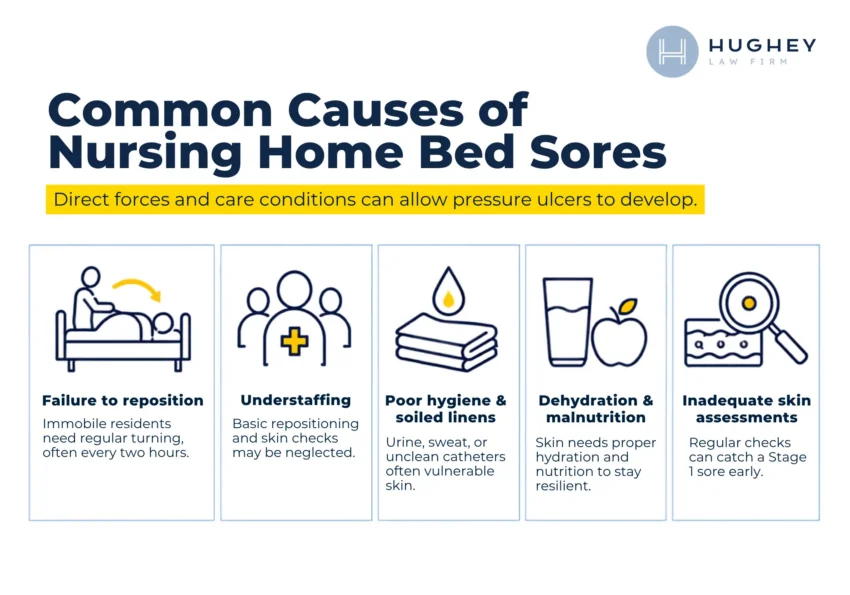
- One example of neglect is failing to reposition residents. Immobile residents need to be turned and repositioned regularly, often every two hours. This single step is the most effective form of prevention.
- Understaffing. When a facility does not have enough staff on duty, basic repositioning and skin checks are often the first tasks to be neglected.
- Poor hygiene and soiled linens. Moisture from urine, sweat, or unclean catheters softens the skin, making it more vulnerable to breakdown. Leaving a resident in soiled bedding for extended periods accelerates sore development.
- Dehydration and malnutrition. Skin needs proper hydration and nutrition to stay resilient.
- Inadequate skin assessments are another issue. Staff should regularly check the skin of residents at risk. A Stage 1 sore that is caught early is simple to treat.
The progression from a Stage 1 sore to a life-threatening Stage 4 wound does not happen overnight. Every stage of this progression represents an opportunity that the facility failed to act on. Call (843) 881-8644 to speak with a Charleston nursing home bed sore lawyer about whether your loved one’s bed sores are the result of the kind of preventable neglect that South Carolina law holds nursing homes accountable for.
Signs a Resident May Be Developing Pressure Ulcers
- Redness or discoloration over bony areas that does not fade after repositioning
- Skin that feels warmer, cooler, or firmer than the surrounding area
- Complaints of pain or tenderness in a specific spot
- Visible blisters, abrasions, or open wounds
- A foul odor, which can indicate infection
- Soiled or wet bedding during visits
- A resident who seems to stay in the same position for long periods of time
Who Can Be Held Liable for Charleston Nursing Home Bed Sores?
- Visiting or contracted physicians who are not directly employed by the facility
- Subcontracted nurses
- Subcontracted health aides or attendants
Compensation Available to Bed Sore Victims and Their Families
- Economic damages cover tangible financial losses, such as medical bills for debridement and corrective surgery, physical and psychological therapy, medical equipment, lost income, and funeral or burial expenses in fatal cases.
- General damages cover the more subjective costs, such as pain and suffering, scarring and disfigurement, loss of bodily function, and the strain that a serious injury can place on family relationships.
- Punitive damages may be available under South Carolina Code Section 15-32-510 if there is clear and convincing evidence of willful, wanton, or reckless conduct by the facility.
Can a Nursing Home Successfully Defend a Bed Sore Claim?
Taking Action After Charleston Nursing Home Negligence Causes Bed Sores
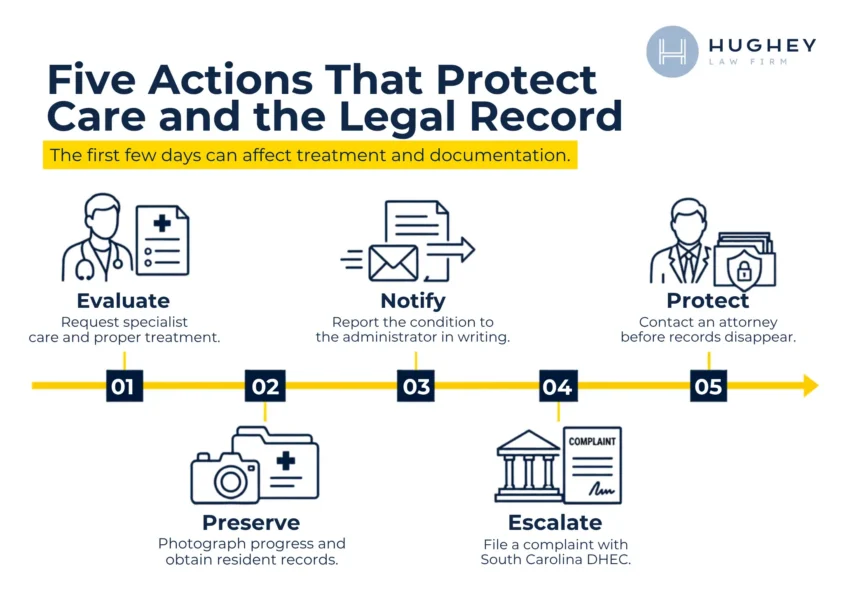
- Request an immediate medical evaluation. A wound care specialist can evaluate the stage of the sore and begin proper treatment right away.
- Photograph the sore. Document its size, depth, and location, and continue to do so as treatment progresses.
- Request the resident’s medical and care records. These records include repositioning logs, skin assessments, and the facility’s documented response.
- Report the condition to the facility administrator in writing. Keep a copy of everything you send.
- File a complaint with the South Carolina Department of Health and Environmental Control. A complaint can trigger a state inspection.
- Contact a nursing home bed sore attorney. An attorney can preserve records before they disappear and determine if the facility’s level of care was below the legal standard.
Get in Touch With a Charleston Nursing Home Bed Sore Lawyer Today
If your loved one developed a bed sore in a Charleston-area nursing home, know that you don’t have to face this situation alone. The Hughey Law Firm has represented victims of nursing home neglect throughout the Charleston metro region and across South Carolina. We handle every case with the seriousness it deserves.
We work on a contingency basis, so you will not pay any attorney fees until we win your case.
Call (843) 881-8644 for a free consultation, fill out our contact form, or use live chat to speak with our team now. We represent families throughout Charleston, the Lowcountry, and across South Carolina.

Disclaimer: The information on this page is intended for general informational purposes only and does not constitute legal advice. Every case is different. Past results do not guarantee future outcomes. Hiring a lawyer is an important decision that should not be based solely on advertisements. Ask us to send you free written information about our qualifications and experience before you decide. The Hughey Law Firm is located in Charleston, South Carolina.
Frequently Asked Questions
How long do I have to file a nursing home neglect claim in South Carolina?
In most South Carolina cases, the deadline is three years from the date of the injury or its discovery. Because facility records can be lost or altered over time, contacting an attorney early protects your family’s evidence and legal rights.
What should I do if my loved one develops a Stage 3 or Stage 4 pressure ulcer?
Seek immediate medical treatment, document the wound with photographs, request medical records, report the condition to the facility in writing, file a complaint with DHEC, and contact an attorney promptly.
Can bed sores lead to serious infections or death?
Yes. Untreated advanced pressure sores can lead to sepsis, a dangerous bloodstream infection. Pressure ulcer-related infections have been linked to tens of thousands of deaths nationally.
What compensation is available in a bed sore lawsuit?
Compensation can include medical bills, corrective surgery, therapy costs, lost income, pain and suffering, scarring and disfigurement, and in some cases punitive damages or wrongful death damages.
Who can be held liable for nursing home pressure ulcers?
The nursing home itself, individual staff members, and in some cases contracted physicians, nurses, or health aides who failed to meet the standard of care can all be held liable.
How can nursing homes prevent bed sores?
Regular repositioning, routine skin checks, proper hygiene, adequate hydration and nutrition, and sufficient staffing to perform these tasks consistently are the core preventive measures.
What causes bed sores in nursing home residents?
Bed sores develop from unrelieved pressure, friction, and shear, usually worsened by understaffing, infrequent repositioning, poor hygiene, dehydration, and malnutrition.
Are bed sores a sign of nursing home neglect?
Often, yes. Pressure sores are largely preventable with proper repositioning, hygiene, and nutrition. A serious sore, especially Stage 3 or Stage 4, frequently indicates the facility failed to provide adequate care.