






- Auto and Trucking Accidents, Dram Shop, Featured Cases, Wrongful Death
- Featured Cases, Wrongful Death
- Featured Cases, Trucking Accident
- Nursing Home / Assisted Living Facility
- Featured Cases, Premises Liability
- Nursing Home / Assisted Living Facility
- Auto and Trucking Accidents, Dram Shop, Featured Cases, Wrongful Death
- Featured Cases, Wrongful Death
- Featured Cases, Trucking Accident
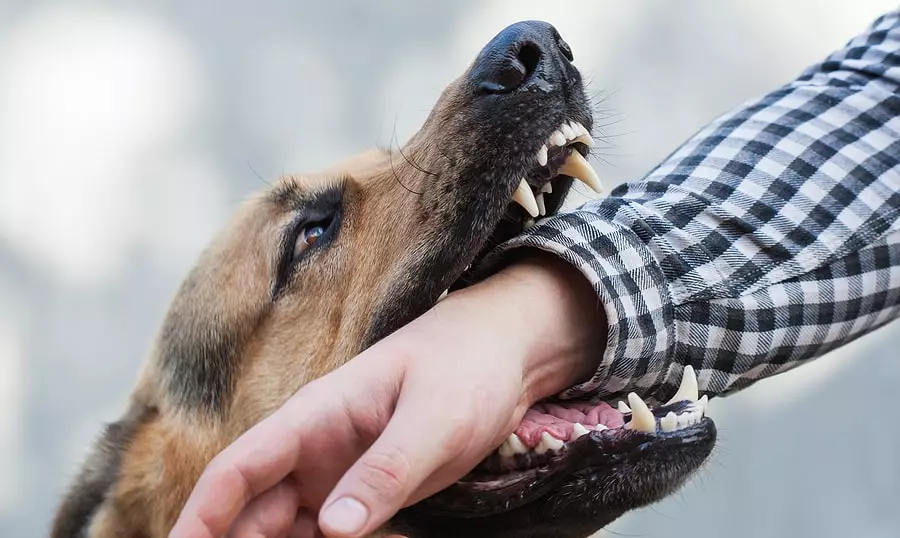
The South Carolina dog bite injury attorneys at Hughey Law Firm help victims and families seek compensation after a dog bite or attack. According to South Carolina law, the responsibility lies with the dog’s owner or keeper.
Key Takeaways
- South Carolina is a strict liability state. If a dog bites or attacks you in a public place or while you are lawfully on private property, the owner or keeper is liable, even if the dog has never bitten anyone before.
- The main defenses are provocation and a law enforcement dog acting under specific conditions.
- Bites must be reported to the Department of Public Health, and the dog must be quarantined for 10 days to check for rabies.
- Although you generally have three years to file a claim, evidence fades quickly.
- The Hughey Law Firm offers free consultations and works on a contingency fee basis.
South Carolina Dog Bite Injury Guide
SC Dog Bite Laws
Dog bite victims are generally entitled to compensation. SC Code Ann. 47-3-110 provides that “the dog owner or person having the dog in the person’s care or keeping is liable for the damages suffered by the person bitten or otherwise attacked” when the person is in a public place or lawfully in a private place. A person is lawfully on private property, including a dog owner’s property, if they are performing a duty imposed by law, such as postal regulations, or if they are on the property by express or implied invitation. According to various South Carolina court cases, the owner is legally responsible for his or her dog, even if the dog is in someone else’s care at the time of the incident.
Dog owners are liable not only for dog bites, but also for injuries resulting from an attack by a dog. For example, a dog may pounce on someone trying to escape an attack. The dog may knock someone down, especially a child or an elderly person, and hurt them. In those circumstances, the dog owner may be responsible for the resulting injury.
Who Is Liable for Dog Bites?
In South Carolina, when a dog causes injury to a person, the dog’s owner (or the person in control of the dog) is responsible for the resulting harm. The injured person only needs to show that the dog bit or attacked them.
- Someone other than the owner who was taking care of the dog or had control over the dog.
- If the dog’s owner is less than 18 years old, there is a chance that his or her parents may be liable.
- If the owner’s landlord knows that a renter had a dog on the premises that was vicious or dangerous but did not do anything about it, the landlord may be liable.
Exceptions to Liability for Dog Bites
- The attack was in direct and complete compliance with the lawful command of a certified canine officer.
- The dog was trained and certified to the standards of the South Carolina Law Enforcement Training Council.
- The agency has a written policy on the use of dogs and it was followed.
- The handler’s and dog’s actions did not amount to excessive force.
- The attack did not happen to a third-party bystander.
South Carolina’s Dangerous Dog Law
- Keep the dog securely confined indoors or in a locked, clearly marked enclosure, and restrain it when off the property.
- Register the dog with local law enforcement, with proof of liability insurance or a surety bond of at least $50,000.
Workers’ Compensation and Dog Bite Injuries
According to Postal Service data, more than 6,000 dog attacks on postal employees were recorded in 2024. Today, there are many people, such as delivery persons, repair persons, or other employees who must enter private residences or property to do their jobs. Increasingly, strangers are bringing packages, food, and more to our homes.
A dog may think that handing a package to a family member is a threatening gesture. Dogs who perceive a threat may break through a screen door and bite. If a dog bites an employee, the employee can submit a claim for workers’ compensation benefits.
It is important to know both options because workers’ compensation alone does not pay for pain and suffering.
What Types of Injuries Occur From Dog Bites?
The American Veterinary Medical Association (AVMA) and the Centers for Disease Control and Prevention (CDC) report that more than 4.5 million people experience dog bites each year in the United States; about half of them are children. In 2024, insurers paid $1.57 billion in dog-related injury claims, with 22,658 claims and an average cost of $69,272 per claim, according to the Insurance Information Institute and State Farm. Thousands of dog bite victims need reconstructive surgery, as well as long-term psychological support.
For victims of all ages, some of the common injuries include:
- Puncture wounds.
- Soft tissue injuries.
- Cuts, bruises, and abrasions.
- Lacerations.
- Permanent scarring (children often have facial scarring).
- Fractures and broken bones.
- Traumatic brain injuries (TBIs).
- Emotional distress.
Along with the physical injuries, there is a risk of serious infections caused by the bite’s germs and bacteria. Infection happens in about 10 to 15 percent of dog bite injuries, according to the American Academy of Pediatrics. The bites can lead to infections such as:
- Rabies. It is a rare but very serious disease people can get from dog bites. The rabies virus affects the brain; it spreads through direct contact with the nervous system tissue or saliva from an infected animal. Once symptoms appear, it is almost always fatal. Worldwide, dogs are the source of most human rabies cases. In South Carolina, the Department of Public Health reports about 144 rabid animals a year since 2002. If a dog has bitten you, you should seek immediate medical care.
- MRSA (methicillin-resistant Staphylococcus aureus) is a dangerous, antibiotic-resistant type of staph infection. Dogs and other animals may have MRSA without experiencing any symptoms. However, MRSA infections are very dangerous and life-threatening for humans. They often spread and may affect the heart, lungs, bones, joints, urinary tract, and bloodstream.
- Pasteurella multocida. This bacteria is in more than 50 percent of dog bite wound infections. In addition to a painful infection from the bite, victims may suffer joint pain, swollen glands, and limited mobility. The infection is potentially dangerous, especially for those with weakened immune systems, and can cause a chronic local infection of deep tissues and osteomyelitis.
- Capnocytophaga bacteria. This type of bacteria lives in the mouths of people, dogs, and cats. The dog is not affected by the bacteria, but it can spread to people through bites or scratches. Not everyone becomes sick, but those who have a weakened immune system face a much greater risk of becoming sick because it is harder for their bodies to fight infections.
- Tetanus from a dog bite may result in rigid paralysis.
Insurance Coverage and Dog Bite Injuries
Damages in Dog Bite Cases
If the victim dies as a result of the injury, then the victim’s family may bring a wrongful death claim against the dog’s owner.
What Do I Do After a Dog Bite?
South Carolina law requires bites to be reported to the county health department, and the Department of Public Health takes animal incident reports. A doctor must report a bite by the end of the next working day, and if no doctor treats you, the adult or parent must report it. The owner’s dog is then quarantined for ten days for observation, at the owner’s property or a shelter.
This can help you if you decide to take legal action, and it can help your medical provider determine your risk of contracting rabies. If a stray or unleashed dog bit you, or you do not know where the dog is, you may need a series of rabies vaccinations. You may also need them if the dog is monitored and shows signs of rabies.
After getting medical treatment, file a bite report with the local police or animal control. Keep detailed notes about what occurred, including where you were and whether anyone was restraining the dog. Take pictures of your injuries, the scene, and any damaged or bloody clothing. Also, try to get names and contact information for any witnesses.
A record of your medical treatment may be necessary if you pursue legal action.
to an insurance company until you speak with a lawyer.
Consult a South Carolina Dog Bite Lawyer at the Hughey Law Firm
Any dog can bite; these incidents can happen anywhere, at any time. More than half of all dog bites occur in a home with dogs that are familiar to the victim. South Carolina requires that you file a lawsuit within three years of the injury’s date to meet the statute of limitations laws, but don’t wait. As time passes, evidence could disappear and memories could become foggy. Contact a lawyer as soon as you are able.

If a vicious dog has caused you or someone you love injury, you have a right to compensation. An experienced, compassionate South Carolina personal injury lawyer who handles dog bite cases can evaluate your claim, protect your rights, and guide you through the claims process. We serve clients in Charleston, Mt. Pleasant, Columbia, Myrtle Beach, and across South Carolina.
For more information or to arrange a free initial consultation, call Hughey Law Firm at (843) 881-8644 or contact us online.
Related Practice Areas
Frequently Asked Questions About South Carolina Dog Bite Injury Attorney
What is strict liability in a South Carolina dog bite case?
It means the owner is liable for a bite or attack even if the owner had no reason to think the dog was dangerous. South Carolina does not follow the “one-bite” rule.
How do I obtain compensation for a dog bite?
Through the dog owner’s insurance claim or a lawsuit. You must show that the dog bit or attacked you in a public place or while you were lawfully on private property.
How are dog bite claims paid?
Usually by the owner’s homeowners or renters insurance, which often has limits between $100,000 and $300,000. Some policies exclude dog bites or certain breeds.
What is the time limit to file a dog bite lawsuit?
Generally three years from the injury date. The deadline may be extended while a victim is a minor, and claims involving government-owned dogs have shorter deadlines.
The dog knocked me over but did not bite me. Is the owner liable?
Yes. The statute covers a dog that bites “or otherwise attacks,” including knocking someone down.
Is the owner ever not liable?
Yes. The main exceptions are when the victim provoked or harassed the dog and that caused the attack, or when a certified law enforcement dog acted within strict conditions.
What happens to a dog that bites someone?
The bite is reported to the county health department, and the dog is quarantined for ten days for rabies observation, at the owner’s expense. A dog that makes an unprovoked attack causing bodily injury may be classified as dangerous.
Can the owner face criminal charges?
For a dangerous animal that injures a person, the first offense is a misdemeanor (up to $5,000 or three years), and later offenses are felonies. A criminal case is separate from your civil claim.
If I was bitten at work, do I file a workers’ compensation or personal injury claim?
Possibly both. Workers’ compensation covers medical care and lost wages regardless of fault, and you may also have a claim against the dog’s owner for pain and suffering.
How much does it cost to hire Hughey Law Firm?
Nothing upfront. We work on a contingency fee basis, so you pay no attorney fees unless we recover compensation.
Do I need a dog bite lawyer?
You are not required to have one, but an attorney can find every liable party and insurance policy, document your damages, counter provocation arguments, and negotiate with the insurer.
Past results do not guarantee future outcomes. The information on this page is for general informational purposes only and does not constitute legal advice.