






- Automobile Accident
- Automobile Accident, Featured Cases
- Automobile Accident
- Automobile Accident, Dram Shop
- Automobile Accident
- Automobile Accident
- Automobile Accident
Key Takeaways
- Uber’s insurance coverage depends on what the driver is doing. According to state law, drivers must have at least $1 million in liability coverage once they accept a trip and lower limits while waiting for a request.
- In South Carolina, Uber’s insurance cannot rely on the driver’s insurer denying the claim first.
- Fault determines who pays. The Uber driver, another driver, or both may be responsible, and Uber is not automatically liable.
- Generally, you have three years to file a claim, and you can still recover compensation if you are 50% or less at fault.
- The Hughey Law Firm takes cases on a contingency fee basis, so you pay no attorney fees unless we recover compensation for you.
South Carolina Uber Accident Guide
Uber Presents Unique Legal Challenges
Ridesharing is now part of everyday travel. According to the Pew Research Center, the share of Americans who have used ridesharing services more than doubled in just a few years, and Uber reports more than 200 million monthly users worldwide. The two most popular services are Uber and Lyft, and Uber is available across South Carolina. Demand is highest in cities, but the service continues to expand.
Ridesharing services, also known as transportation network companies (TNCs), are similar to taxi services, but there are some important differences. Each company has an app that users download to request a ride. The app uses the GPS on the user’s phone to match them with the nearest available driver, and in most cities it shows an estimated fare in advance. Rideshare companies are regulated in South Carolina under the Transportation Network Company Act and the Office of Regulatory Staff, rather than under taxi licensing rules. They may also have surge rates, particularly during rush hours.
Uber’s Insurance in South Carolina
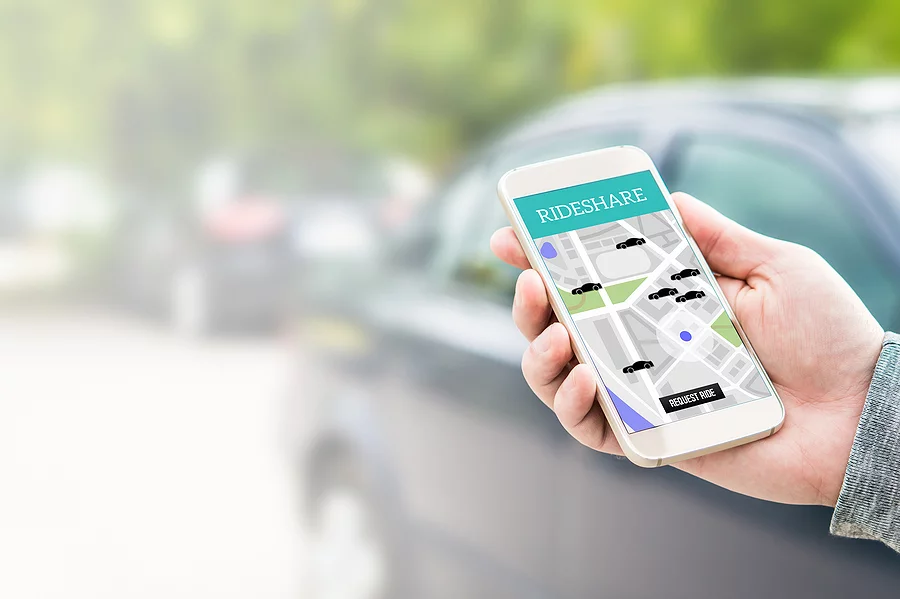
An Uber driver must have car insurance covering both their passengers and other drivers involved in the car accident. Additionally, in South Carolina, Uber vehicles are also covered by insurance policies held by Uber. Drivers must also carry their own personal insurance for the instances where they are not driving for hire.
- App on, waiting for a request: The driver must have primary liability coverage of at least $50,000 per person and $100,000 per incident for death and bodily injury, plus $50,000 for property damage, along with uninsured motorist coverage. Either the driver’s insurance, Uber’s, or both can satisfy this requirement. Uber’s published backup policy for this period lists $50,000, $100,000, and $25,000 for property damage.
- Trip accepted, on the way to a pickup, or passenger in the car: The driver must have at least $1 million in liability coverage for death, bodily injury, and property damage, plus uninsured motorist coverage. Uber’s policy also lists uninsured and underinsured motorist coverage for bodily injury and contingent collision and comprehensive coverage with a $2,500 deductible.
- App off: The driver is not working, and the driver’s personal auto insurance covers them.
Minimum Uber Car Requirements
- A vehicle that is 15 to 16 years old or newer.
- A 4-door vehicle.
- In good condition with no cosmetic damage.
- Free of commercial branding.
- Displaying an Uber decal at all times.
- Inspected within 30 days of the first trip.
Uber Driver Requirements
- According to Uber’s help center, drivers must meet the minimum driver age for their state, which Uber lists as 23 in South Carolina.
- Drivers must have at least one year of U.S. driving experience, or three years if under 25.
- Drivers must have in-state car insurance in their name.
- Drivers must have in-state car registration.
- Drivers must have an in-state driver’s license.
- Drivers must have a Social Security number to complete the background check.
- DUI or drug-related offenses.
- Incidents of driving without insurance or license.
- Fatal accidents
- Record of reckless driving.
- Criminal history.
You can call (843) 881-8644 or complete our contact form to schedule a free consultation and connect with our team.
Common Causes of Ridesharing Accidents
In 2023, South Carolina recorded 145,761 traffic collisions, with 1,047 people killed and 51,638 injured, according to the South Carolina Department of Public Safety. What causes those accidents?
- Inattentive drivers. Rideshare drivers are subject to frequent distractions. They may be watching their GPS, watching the app for prospective passengers, or looking for passengers they have been sent to pick up.
- Failure to properly maintain the vehicle. Some drivers may not invest the time or money into maintenance and necessary repairs, to receive as much money as possible.
- Sudden or illegal U-turns may cause a T-bone accident.
- Drunk driving or driving under the influence of a narcotic substance.
- Unsafe lane changes.
- Speeding.
- Driver fatigue. Rideshare drivers often drive for long hours without sufficient rest. Driver fatigue is as dangerous as driving while under the influence of an intoxicating substance.
- Aggressive driving. Like all drivers, in some circumstances, drivers may cross the line into aggressive driving or deadly road rage.
- Failure to obey traffic signs and signals.
- Tailgating.
Common Uber Accident Injuries
Traumatic brain injuries often occur as a result of car accidents. According to the Centers for Disease Control (CDC), a TBI disrupts normal brain function. The victim of a TBI may require continuous, long-term care.
A spinal cord injury is a devastating injury that affects the body’s ability to move and feel. Life may never be the same. Treatment and adaptive equipment may be disastrously expensive.
The symptoms of internal injuries may not show up for days or even weeks. But, if left untreated, internal injuries can be extremely dangerous.
A serious car accident can result in one or more broken bones, leading to pain and limited mobility.
What to Do After an Uber Accident
- Call 911 and get medical care. Ask for a police report, and see a doctor even if you feel fine.
- Screenshot the Uber app. Capture the driver’s name, car, plate, and trip status before it changes. This helps show whether the driver was waiting, on the way to a pickup, or carrying a passenger.
- Ask the driver for the app status and insurance. State law requires a rideshare driver to disclose whether he or she was logged on or on a trip.
- Collect information. Get the other driver’s name, plate, and insurance, plus witness contact information.
- Document the scene. Photograph the vehicles, your injuries, and the location.
- Report the crash in the Uber app. A report does not replace a legal claim.
- Do not give a recorded statement or sign a release until you speak with an attorney.
- Call a lawyer. An attorney can request trip and driver records before they are lost.
South Carolina Rideshare Accident Claims
If your injuries are severe and will prevent you from returning to work, you may wish to file a lawsuit in civil court for your expenses and losses related to the injury. South Carolina generally gives three years from the accident to file, and wrongful death claims run three years from the date of death. If you are partly at fault, you can still recover as long as you are 50% or less at fault under the rule in Nelson v. Concrete Supply Co., though your damages are reduced by your percentage. Uber’s terms of service may also include an arbitration clause for disputes with Uber itself, which does not affect claims against other drivers, so have an attorney review them. The attorneys at Hughey Law Firm are here to help.
What Type of Compensation Is Available to Me If I’ve Been Injured in a South Carolina Uber Accident?
- Medical expenses, including the cost of emergency treatment at the scene or in the emergency department; transport to the hospital via ambulance or air; diagnostic testing; surgical or physician services; prescription medication; hospitalization; physical therapy and rehabilitation. Assistive devices such as prosthetics, crutches, or wheelchairs are also compensable expenses.
- Lost wages if you are too injured to work or must miss work to attend injury-related medical appointments.
- Loss of future earning capacity if your injury results in a disability that renders you unable to work or to earn in the same capacity as you did before the accident.
- Physical pain and suffering
- Emotional distress
- Loss of the enjoyment of life
The Three Biggest Ridesharing Risks
- Car and pedestrian accidents. When sitting in the backseat, users may forget to consider normal traffic safety. Pay attention to where you are going and whether the driver is operating the car safely.
- Criminals. Even drivers who pass the required background checks may commit crimes. According to a 2018 CNN investigation, at least 103 Uber drivers were accused of abusing or sexually assaulting their passengers in a four-year period. At least 31 were convicted. Read our article on violent crime by Uber drivers.
- Fake drivers: Criminals can pose as rideshare drivers and assault their passengers. In a well-known case from March 2019, Samantha Josephson, a University of South Carolina student, mistakenly got into a car she thought was her Uber and was killed by the driver within hours. In response, South Carolina passed the Samantha L. Josephson Ridesharing Safety Act, also known as Sami’s Law. The law requires rideshare vehicles to display a front license plate number and a company-provided sign that is visible in the dark. It also makes it a crime to falsely pose as a rideshare driver. Always check that the car matches what is on your app before getting in.
Were You in a Ridesharing Crash? Call Our South Carolina Uber Accident Attorneys Today

The personal and financial costs of an accident can be catastrophic. If you or a loved one has been injured in a ridesharing accident, please contact our dedicated South Carolina personal injury law firm as soon as possible. We serve clients in Charleston, Mt. Pleasant, Columbia, Myrtle Beach, and across South Carolina.
For more information or to schedule a free consultation, call Hughey Law Firm at (843) 881-8644 or contact us online.
Past results do not guarantee future outcomes. The information on this page is for general informational purposes only and does not constitute legal advice.
Related Practice Areas
Frequently Asked Questions About South Carolina Uber Accident Attorneys
How do I recover damages from a South Carolina Uber accident?
You can recover damages through an insurance claim or a lawsuit in civil court. The case must show who was liable and what expenses and impacts your injuries caused. South Carolina generally gives three years from the accident date to file.
Are South Carolina Uber drivers required to have a special type of insurance?
Yes. Drivers must meet the state minimum ($25,000 per person, $50,000 per accident, and $25,000 property damage), and rideshare drivers must also carry TNC coverage. That means at least $50,000 per person and $100,000 per incident (plus property damage) while waiting for a request, and at least $1 million in liability coverage once a trip is accepted. Uber’s policy can supply this coverage, and it may not depend on the driver’s insurer denying the claim first.
Is there ever a circumstance where Uber is liable for the accident?
Possibly. Claims against Uber itself, such as for failing to properly screen a driver, depend on the facts and are difficult to prove, and Uber’s terms of service may require arbitration.
Are South Carolina Uber drivers required to undergo specific training?
No. Drivers must meet Uber’s requirements, including age, driving experience, vehicle standards, insurance, and a background check, but Uber does not require special driving training.
What happens if another driver struck the Uber car?
The other driver’s auto insurance is the first resource for compensation. If that driver is uninsured or underinsured, Uber’s uninsured and underinsured motorist coverage may apply during trips, or your own coverage may apply.
What is the average settlement in a South Carolina Uber accident case?
There is no average. Value depends on the available insurance, who was at fault, your injuries and expenses, your age and health, and how the case unfolds. If you share some fault, your award is reduced by your percentage.
Why are Uber accident cases more complex than other accident claims?
Because several insurance policies may be involved, including the driver’s, Uber’s, and other drivers’, and because drivers are independent contractors. Insurance pays the vast majority of these claims, and multiple policies can mean more places to recover.
How much does it cost to hire Hughey Law Firm?
Nothing upfront. We work on a contingency fee basis, so you pay no attorney fees unless we recover compensation.
If my Uber driver caused the accident, is the driver liable or is Uber?
The driver is usually the main source of liability, and the insurance covering the driver, including Uber’s policy when it applies, is the usual source of compensation. Because Uber classifies drivers as independent contractors, it is not automatically responsible for a driver’s actions.
Should I talk to Uber’s insurance adjuster?
Give only basic facts, do not admit fault or give a recorded statement, and refer the adjuster to your attorney.
What if the Uber driver was not logged into the app?
Then the driver’s personal auto policy generally applies. Trip records can show the driver’s status, so an attorney should request them.
Do I need a South Carolina Uber accident lawyer?
You are not required to have one, but an attorney can prove the driver’s app status, find all available insurance, handle the insurers, and take your case to trial if needed. If a loved one died, the case may also involve a wrongful death claim.