





Results & Settlements
- Featured Cases, Nursing Home
- Assisted Living, Featured Cases, Nursing Home
- Featured Cases, Group Home Abuse & Neglect, Nursing Home
- Nursing Home
- Nursing Home
- Assisted Living, Nursing Home
- Nursing Home
- Hospital Neglect, Nursing Home
- Nursing Home
Key Takeaways
- In South Carolina, sexual assault of a nursing home resident is a criminal offense under the Omnibus Adult Protection Act (South Carolina Code Section 43-35-85) and may also constitute criminal sexual conduct under South Carolina Code Section 16-3-651. Regardless of the outcome of any criminal case, a separate civil claim against the facility is available.
- Nursing homes in South Carolina are legally required to protect residents from sexual abuse by staff or other residents. If a facility fails to implement adequate screening, supervision, or safety protocols, resulting in a sexual assault, the facility itself bears civil liability alongside the individual perpetrator.
- Nursing home sexual assault is severely underreported. According to research cited by national health organizations, only about 12 percent of nursing home sexual abuse incidents are ever reported to the authorities. This makes family vigilance and early legal action especially critical.
- South Carolina’s Attorney General’s Medicaid Fraud Control Unit actively prosecutes nursing home staff who commit sexual offenses against residents. In 2023, for example, a licensed practical nurse at a skilled nursing facility in Sumter, South Carolina, was convicted and sentenced to eight years in prison for sexually assaulting a resident classified as a vulnerable adult.
- The statute of limitations for civil claims related to nursing home sexual assault in South Carolina is generally three years from the date of the abuse or its discovery. Prompt action preserves evidence, protects the right to compensation, and prevents the facility from controlling the narrative.
South Carolina Nursing Home Sexual Assault Guide
Why Nursing Home Residents Are Vulnerable to Sexual Assault
Who Commits Sexual Assault in South Carolina Nursing Homes
Sexual assault in South Carolina nursing homes is committed by staff members and other residents alike. Both categories give rise to civil liability for the facility when its failures enabled or failed to prevent the assault.
- Staff perpetrators include: Certified nursing assistants, licensed practical nurses, registered nurses, dietary staff, housekeeping staff, and other facility employees have been identified as perpetrators in sexual abuse cases in South Carolina nursing homes. In 2023, the South Carolina Attorney General’s Medicaid Fraud Control Unit prosecuted a licensed practical nurse at a Sumter facility for sexually assaulting a resident classified as a vulnerable adult under state law. The nurse received an eight-year prison sentence.
- Resident-on-resident assault: Sexual abuse between residents is a frequently cited and well-documented problem in South Carolina facilities. The South Carolina Department of Health and Environmental Control has cited multiple facilities for failing to protect residents from such abuse, including Lake Emory Post Acute Care in Inman and Lancaster Convalescent Center. A facility bears civil liability for resulting harm when it knows or should have known that a resident poses a risk to others and fails to take appropriate precautions.
- Visitors and contractors: In some cases, individuals who are not facility employees, including volunteers, contract workers, or visitors, commit sexual assault against residents. Facilities have a duty to implement access controls and supervision protocols that protect residents from foreseeable risks posed by non-staff individuals.
What South Carolina Law Says About Nursing Home Sexual Abuse
According to the South Carolina Omnibus Adult Protection Act under Title 43, Chapter 35 of the South Carolina Code, the sexual abuse of a vulnerable adult is a criminal offense. Facilities have mandatory reporting obligations, and failing to report is a criminal offense in itself.
South Carolina provides nursing home residents with legal protections under state and federal law.
According to the Omnibus Adult Protection Act (South Carolina Code Section 43-35-85), sexual abuse of a vulnerable adult is defined as any non-consensual sexual contact, including touching, fondling, intercourse, or exhibitionist acts. The statute classifies the intentional sexual abuse of a vulnerable adult as a felony and establishes criminal penalties for perpetrators. Facilities and their staff who observe or suspect abuse and fail to report it also face criminal liability under the Act’s mandatory reporting provisions.
Under the Omnibus Adult Protection Act, any person who has reason to believe that a vulnerable adult has been abused must report it to the appropriate authorities. In nursing home settings, this means reporting to the Long-Term Care Ombudsman Program and the Department of Health and Environmental Control (DHEC). Criminal acts must also be reported to law enforcement. Facilities that discourage reporting, handle abuse complaints internally without external notification, or retaliate against residents or staff who report violations these mandatory reporting requirements.
South Carolina Code Section 44-81-40, the Resident Bill of Rights, guarantees nursing home residents the right to be free from abuse, including sexual abuse, and to have any allegations of abuse investigated and resolved. A resident whose rights are violated under this statute may take legal action against the facility.
According to federal CMS requirements under 42 CFR Part 483, nursing homes that participate in Medicare and Medicaid must protect their residents from abuse. These requirements also prohibit staff members who have committed abuse from working at the facility and ensure that all allegations of abuse are investigated and reported to the appropriate state agencies.
Warning Signs of Nursing Home Sexual Abuse
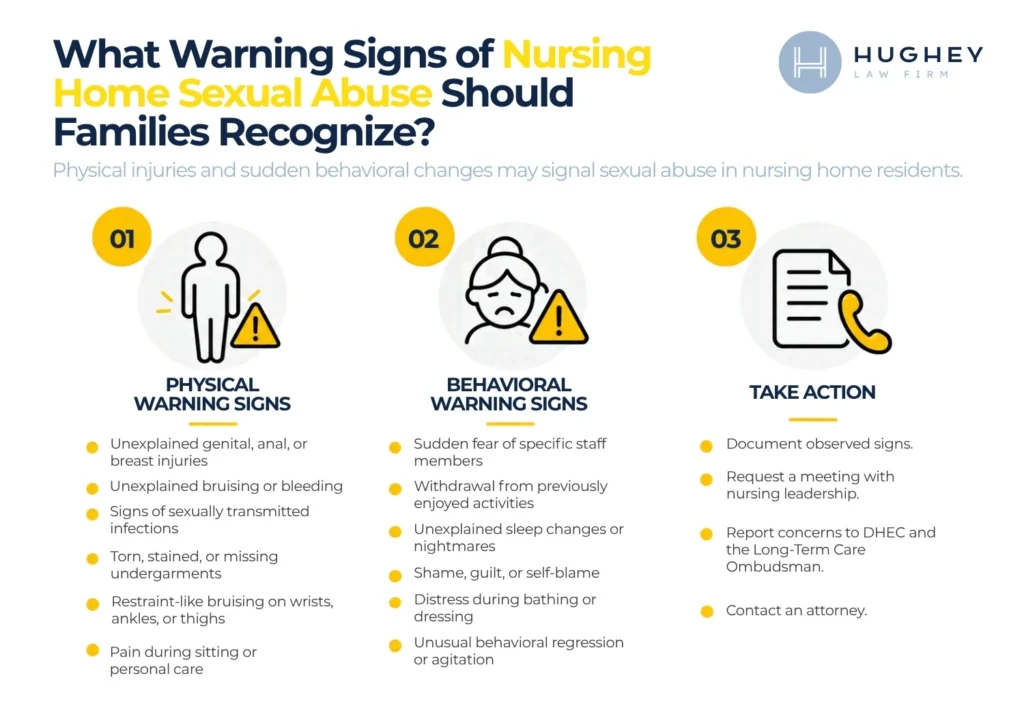
- Unexplained bruising, bleeding, or injury in the genital, anal, or breast areas
- Signs of a sexually transmitted infection in a resident with no prior history of STIs
- Torn, stained, or missing undergarments or bedding
- Bruising on the wrists, ankles, or inner thighs consistent with restraint
- Unexplained pain when sitting, standing, or during personal care
- Sudden fear, agitation, or distress around specific staff members or at specific times of day
- Withdrawal from activities and social contact that the resident previously enjoyed
- Unexplained changes in sleep patterns, including nightmares or refusal to sleep
- Unusual regression in behavior for residents with cognitive impairment
- Expressions of shame, guilt, or self-blame without an apparent cause
- Extreme emotional distress during bathing, dressing, or other intimate care tasks
If you observe any of these signs in a loved one at a South Carolina nursing home, document them, request a meeting with the director of nursing, report your concerns to the Department of Health and Environmental Control (DHEC) and the Long-Term Care Ombudsman, and contact an attorney before the facility’s internal investigation has the opportunity to shape the record.
Civil Liability: How a Facility Can Be Held Responsible
A nursing home can be held civilly liable for sexual assault that occurs on its premises if it employs a perpetrator, fails to screen staff for prior abuse history, fails to supervise staff during intimate care tasks, or fails to protect one resident from another resident who is known to pose a risk. This civil claim is entirely separate from any criminal prosecution.
Failing to conduct adequate background checks that would have revealed a history of sexual offenses, boundary violations, or other concerning conduct before employing the perpetrator.
Failing to monitor staff during intimate care activities, allowing unsupervised access to vulnerable residents, or tolerating a culture that normalizes inappropriate staff-resident interactions.
Retaining an employee after receiving complaints or observing concerning conduct that should have triggered disciplinary action or termination.
Knowingly retaining a resident with a history of sexually abusive behavior and failing to implement appropriate supervision, room placement, or behavioral interventions to protect other residents from that risk.
Failing to implement mandatory reporting protocols, abuse prevention training, or clear procedures for investigating allegations
Under South Carolina’s comparative negligence framework, any fault assigned to the facility does not eliminate the individual perpetrator’s separate civil liability. Both may be pursued simultaneously.

The firm has recovered over $300 million for South Carolina injury victims, including significant results in nursing home abuse and neglect cases. All cases are handled on a contingency fee basis. You pay no attorney fees unless compensation is recovered on your behalf.
Past results do not guarantee future outcomes. Each case depends on its own facts and circumstances.
Talk to a South Carolina Nursing Home Sexual Abuse Attorney Today
What happened to your loved one is not something that should be handled quietly inside the facility that allowed it to occur. The South Carolina nursing home abuse lawyers at Hughey Law Firm conduct independent investigations, pursue every liable party, and fight for the full compensation your family deserves.

Call (843) 881-8644 or contact us online for a free, confidential consultation. There is no fee unless we recover compensation for you.
Related Practice Areas
Frequently Asked Questions About Nursing Home Sexual Assault in South Carolina
How long do I have to file a civil claim after a nursing home sexual assault in South Carolina?
The deadline depends on the circumstances and the legal claims involved. South Carolina has a specific statute addressing actions for injuries arising from sexual abuse. This statute provides a different limitations period than the general personal injury rule. Since additional rules or exceptions may apply, it is important to speak with an attorney promptly after suspected or discovered abuse.
What if my loved one has dementia and cannot describe what happened?
A resident’s inability to describe an assault does not necessarily prevent a civil claim. Medical records, physical findings, behavioral changes, witness statements, and other evidence may help establish what happened. An attorney can review the available evidence and determine how the circumstances may support a claim.
Does a criminal investigation need to conclude before I can file a civil claim?
No, because a criminal investigation and a civil claim are separate legal proceedings. You generally do not have to wait for criminal charges, a conviction, or the conclusion of an investigation before pursuing a civil claim. The evidence and legal standards involved in the two proceedings are also different.
What if the sexual assault was committed by another resident, not a staff member?
A nursing home may have a duty to protect residents from foreseeable harm caused by other residents. Evidence that the facility knew or should have known about a resident’s dangerous or inappropriate behavior may be relevant when determining if the facility failed to take reasonable precautions. Liability depends on the specific circumstances of the case.
Can a nursing home be held liable for sexual assault committed by one of its employees?
In certain circumstances, a nursing home may be held responsible for an employee’s conduct. The facility may also face claims involving negligent hiring, supervision, or retention if these failures contributed to the assault. Whether the nursing home is liable depends on the facts of the case and the relationship between the employee’s conduct and the facility’s responsibilities.