




- Hospital Neglect, Nursing Home
- Hospital Neglect
- Hospital Neglect, Nursing Home
- Hospital Neglect
- Featured Cases, Hospital Neglect, Nursing Home Neglect
- Hospital Neglect
- Hospital Neglect, Nursing Home, Nursing Home Neglect
- Hospital Neglect, Nursing Home
- Hospital Neglect, Nursing Home
- Hospital Neglect
- Hospital Neglect, Nursing Home
- Hospital Neglect
- Hospital Neglect, Nursing Home
- Hospital Neglect
- Featured Cases, Hospital Neglect, Nursing Home Neglect
- Hospital Neglect
Emergency rooms operate under extreme pressure, but pressure is not a legal defense for negligence. If an ER physician, nurse, or hospital system fails to provide the standard of care owed to a patient, causing harm as a result, South Carolina law provides a pathway to compensation. The emergency room negligence attorneys at Hughey Law Firm represent patients and families throughout South Carolina who have been harmed by substandard emergency care.
ER negligence cases are among the most legally demanding types of medical malpractice cases. These cases require expert medical testimony and a pre-suit process mandated by South Carolina law. They also require an attorney who understands the clinical realities of emergency medicine and the procedural requirements unique to these claims. Acting early is critical.
Key Takeaways
- Under South Carolina law, emergency room negligence is a form of medical malpractice. Patients harmed by substandard emergency room care can pursue a civil claim for compensation under South Carolina Code Chapter 15-79. However, strict procedural requirements must be met before a lawsuit can be filed.
- According to South Carolina law, a plaintiff must file a Notice of Intent to File Suit, along with a qualifying expert affidavit, before initiating any medical malpractice action. Mandatory pre-litigation mediation must also be completed. These requirements apply to all ER negligence cases, regardless of the severity of the harm caused.
- The statute of limitations for medical malpractice in South Carolina is generally three years from when the patient discovered or should have discovered the injury. A six-year statute of repose sets an absolute outer limit. Filing the Notice of Intent tolls the statute of limitations while the pre-suit process is ongoing.
- The most common and most litigated forms of emergency room negligence in South Carolina include misdiagnosis, delayed diagnosis, premature discharge, and failure to order appropriate diagnostic testing.
- In South Carolina, hospitals can be held vicariously liable for the negligence of their ER staff. However, when an ER physician is an independent contractor rather than a hospital employee, the analysis of hospital liability changes. Therefore, identifying all potentially responsible parties is an essential early step.
South Carolina Emergency Room Negligence Guide
What Qualifies as Emergency Room Negligence in South Carolina?
According to South Carolina Code Section 15-79-110, medical malpractice is defined as an act or omission by a healthcare provider during the provision of professional services that deviates from generally accepted medical standards and results in a patient’s severe catastrophic injuries. This definition fully applies to emergency room providers.
Common Forms of Emergency Room Negligence
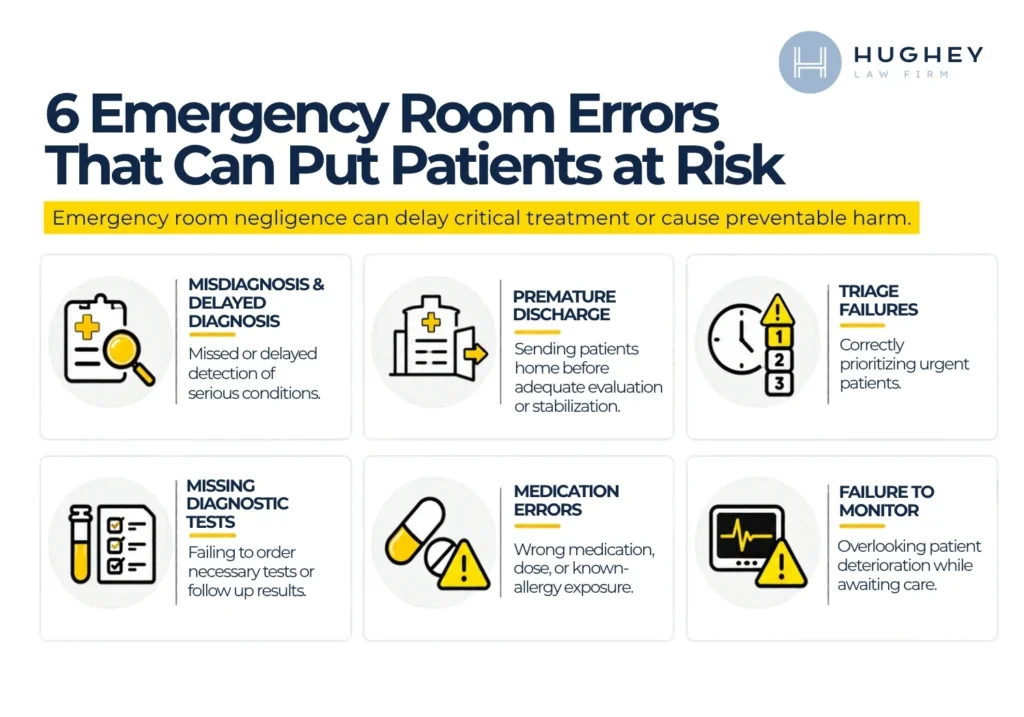
Failure to correctly diagnose a heart attack, stroke, pulmonary embolism, appendicitis, sepsis, or other time-critical condition is the most frequently litigated category of ER negligence. When the window for effective treatment is narrow, a missed or delayed diagnosis can mean the difference between full recovery and permanent disability or wrongful death in South Carolina.
According to research published in Diagnosis, diagnostic errors affect approximately 12 million Americans in outpatient settings annually, with emergency settings contributing significantly to that total.
Administering the wrong procedure, medication or dose, or administering a medication to which the patient has a known allergy, can cause serious, sometimes fatal, harm. Medication errors in emergency settings are exacerbated by the fast pace of care and frequent involvement of multiple providers who may not communicate effectively.
Who Can Be Held Liable for ER Negligence in South Carolina?

In a South Carolina hospital negligence case in an emergency room, liability may fall on the ER physician, the nurses providing treatment, the hospital as an employer, or all three. If the ER physician is an independent contractor, the hospital is only liable if the patient reasonably believed the physician was the hospital’s employee.
Hospitals can be held directly liable for systemic failures, including chronic understaffing of the emergency department, failure to maintain adequate equipment, inadequate training of ER staff, and failure to implement appropriate patient safety protocols.
When ER nurses, residents, and employed physicians commit negligence within the scope of their employment, the hospital is vicariously liable for their conduct under the doctrine of respondeat superior.
Many ER physicians in South Carolina are independent contractors, not hospital employees. South Carolina courts have applied an apparent agency theory in some cases, holding hospitals liable for independent contractor ER physician negligence when a patient reasonably believed the physician was a hospital employee based on how the care was presented and delivered. This is a legally significant distinction that requires attorney analysis specific to each case.
ER negligence often involves a chain of decisions made by multiple providers across a single patient encounter, each of which may have been substandard. A claim may name the triage nurse, the treating physician, the hospital radiologist who misread an image, and the hospital itself.
South Carolina's Legal Requirements for ER Negligence Claims
Before any civil action for medical malpractice can be initiated, South Carolina Code Section 15-79-125 requires the plaintiff to file a Notice of Intent to File Suit, along with a qualified expert affidavit, simultaneously. The affidavit must be from a qualified medical expert attesting that the healthcare provider deviated from the applicable standard of care.
- Mandatory pre-litigation mediation: After filing and serving the Notice of Intent, the parties must participate in mandatory pre-litigation mediation before filing a lawsuit. The mediation conference must be completed within 120 days of filing the Notice of Intent, with a possible 60-day extension. Filing the Notice of Intent suspends the statute of limitations while the pre-suit process is ongoing.
- Statute of limitations: In South Carolina, the statute of limitations for medical malpractice is generally three years from the date the patient discovered, or reasonably should have discovered, the injury. South Carolina also imposes a six-year statute of repose that bars most claims regardless of discovery beyond that limit. Delaying consultation with an attorney jeopardizes both the pre-suit process and the underlying deadline. These requirements render early attorney involvement not just beneficial, but necessary. An attorney unfamiliar with South Carolina medical malpractice cases may not know how these procedural requirements interact with the underlying deadlines. Errors in the pre-suit process can result in the dismissal of an otherwise valid claim.
How Hughey Law Firm Handles ER Negligence Cases in South Carolina

The firm has recovered over $325 million in verdicts and settlements for injury victims in South Carolina. Visit the firm’s results page for case-specific recoveries. All medical malpractice cases are handled on a contingency fee basis. You pay no attorney fees unless compensation is recovered on your behalf.
Past results do not guarantee future outcomes. Each case is evaluated based on its unique facts and circumstances.
You can call (843) 881-8644 or complete our contact form to schedule a free consultation and connect with our team.
Speak With a South Carolina ER Negligence Attorney Today
The South Carolina ER negligence lawyers at Hughey Law Firm offer free, confidential consultations for all ER negligence and medical malpractice inquiries. Call (843) 881-8644 or contact us online to get started. There is no fee unless we recover compensation for you.

Related Practice Areas
Frequently Asked Questions
Does South Carolina limit what I can recover in an ER negligence case?
South Carolina law places limits on noneconomic damages in medical malpractice cases. However, the applicable limits can vary depending on the number and type of healthcare providers or institutions involved. The law also provides exceptions to these limits in certain circumstances. Economic damages are not subject to the same limits.
What if my loved one died because of emergency room negligence?
If a patient died due to medical negligence, a wrongful death claim may be available under South Carolina law. The personal representative of the estate usually files the claim on behalf of eligible beneficiaries. However, medical malpractice claims involving death are subject to applicable pre-suit requirements, including the notice of intent and mediation process.
What is the pre-suit process for an ER negligence claim in South Carolina?
South Carolina requires certain steps before a medical malpractice lawsuit can be filed. These steps generally include filing and serving a Notice of Intent to File Suit, along with a qualified expert affidavit. This is followed by pre-litigation mediation. If the case is not resolved through mediation, the plaintiff may file a lawsuit.
Can I sue a South Carolina hospital for emergency room negligence?
Depending on the circumstances, a hospital may be held responsible for certain failures in patient care or for the actions of its employees. Other healthcare providers, including non-hospital employee physicians, may also be involved in a claim. An attorney can review the facts to determine which parties may be responsible.
How do I know if what happened to me in the emergency room was negligence?
A poor medical outcome does not necessarily indicate negligence. The key questions are whether the healthcare provider failed to meet the applicable standard of care and whether that failure caused harm. Medical records and an expert review may be necessary to determine if a claim exists.