





Results & Settlements
- Featured Cases, Nursing Home
- Assisted Living, Featured Cases, Nursing Home
- Featured Cases, Group Home Abuse & Neglect, Nursing Home
- Nursing Home
- Nursing Home
- Assisted Living, Nursing Home
- Nursing Home
- Hospital Neglect, Nursing Home
- Nursing Home
Dehydration and malnutrition are signs that a facility has failed in its most basic obligation to the people in its care. In South Carolina, when a nursing home allows a resident to go without adequate food or fluids until serious harm results, the facility is legally responsible for the consequences. The nursing home dehydration and malnutrition attorneys at Hughey Law Firm represent residents and families throughout South Carolina in claims against facilities that allow these preventable conditions to develop.
Key Takeaways
- Dehydration and malnutrition are recognized indicators of neglect in nursing home residents. According to federal regulations under 42 CFR 483.25(g), which are enforced through CMS F-Tag 692, nursing homes must maintain the nutritional and hydration status of every resident unless clinical decline is medically unavoidable and documented.
- South Carolina nursing homes are also subject to oversight by the South Carolina Department of Health and Environmental Control (DHEC), which investigates complaints about inadequate resident care, including failures related to nutrition and hydration.
- Dehydration and malnutrition can lead to serious health complications for elderly residents, including urinary tract infections, pressure ulcers, kidney failure, falls, and cognitive decline. These are compensable harms when they result from a facility’s failure to provide adequate care.
- South Carolina nursing home neglect claim based on dehydration or malnutrition requires the same pre-suit notice of intent and mandatory mediation process as other medical malpractice claims under South Carolina Code Section 15-79-125, along with a qualifying expert affidavit.
- Hughey Law Firm has recovered over $300 million for South Carolina injury victims, including significant results in nursing home abuse and neglect cases. All cases are handled on a contingency fee basis.
South Carolina Dehydration and Malnutrition Guide
Why Dehydration and Malnutrition Happen in South Carolina Nursing Homes

Dehydration and malnutrition in nursing home residents are most often caused by chronic understaffing, inadequate monitoring of food and fluid intake, failure to assist residents who cannot feed themselves, and inadequate care planning for residents with swallowing difficulties or other nutrition-affecting conditions.
The elderly population in nursing homes is uniquely vulnerable to these conditions. Older adults have a diminished sense of thirst, so they are less likely to seek fluids independently. Cognitive impairment from dementia or other conditions can prevent residents from recognizing hunger or communicating their needs. Medications commonly used in long-term care settings can suppress appetite, alter taste perception, or increase fluid loss. These are known vulnerabilities that nursing homes are required to address in every resident’s care plan.
When nursing homes fail to account for these vulnerabilities, the results are predictable. Staff who are spread too thin cannot monitor intake at every meal, provide hands-on feeding assistance to those who need it, or identify early warning signs of declining nutritional status before significant harm occurs.
Insufficient certified nursing assistant staffing to provide meal assistance to residents who need it
Failure to develop or follow individualized care plans that address residents' specific dietary needs, texture modifications, or supplemental nutrition requirements
Failure to track and document food and fluid intake over time and respond when intake falls below clinical thresholds
Inadequate response to unexplained weight loss. Under federal CMS guidelines, documented intervention is required when a resident loses more than five percent of their body weight in one month or ten percent in six months
Failure to identify and treat underlying conditions that affect residents' ability to consume adequate nutrition, including swallowing disorders, dental problems, and medication side effects
Poor meal quality, inappropriate meal scheduling, or failure to accommodate food preferences and cultural dietary needs in ways that encourage residents to eat
What Federal Law Requires Nursing Homes to Do
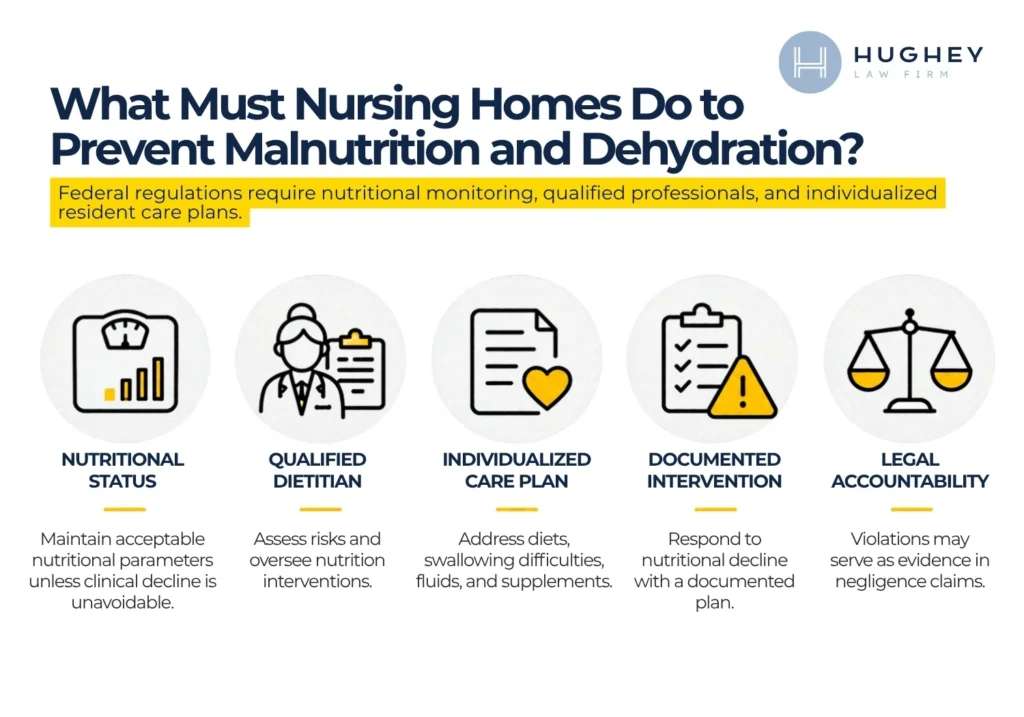
According to federal regulations under 42 CFR 483.25(g), which are enforced through CMS F-Tag 692, nursing homes must ensure that each resident maintains an acceptable nutritional status, unless clinical decline is unavoidable. Facilities must also employ a qualified dietitian and develop an individualized nutrition care plan for each resident.
Virtually every licensed facility in South Carolina participates in Medicare or Medicaid and is therefore required to comply with the federal conditions of participation under 42 CFR Part 483. Several of these regulations specifically address nutrition and hydration.
- F-Tag 692 (Nutritional Status Maintenance) stipulates that residents must maintain acceptable nutritional parameters, such as body weight and protein levels, unless their clinical condition indicates otherwise. When a resident’s nutritional status declines, the facility must intervene with a documented plan instead of waiting and observing.
- Qualified dietitian requirement: Facilities must employ or contract with a qualified dietitian or other clinically qualified nutrition professional to oversee residents’ nutritional care. The dietitian is responsible for conducting nutrition assessments, identifying residents at risk of malnutrition or dehydration, and developing or overseeing individualized nutrition interventions.
- Individualized care planning: Every resident must have an individualized care plan that addresses their specific dietary needs. This includes therapeutic diet orders, texture modifications for swallowing difficulties, fluid requirements, and supplemental nutrition. The care plan must be updated as the resident’s condition changes.
Recognizing the Signs of Dehydration and Malnutrition in a Nursing Home Resident

- Dry or cracked lips and mouth
- Dark, concentrated, or strongly odorous urine
- Sunken eyes or a hollowed appearance around the face
- Skin that tents or does not return to normal when gently pinched
- Confusion, disorientation, or sudden cognitive decline
- Dizziness or an increased fall risk
- Decreased urination
- Unexplained weight loss over weeks or months, visible in how clothing fits
- Muscle wasting, particularly in the arms, legs, and face
- Swelling in the lower legs and feet from low protein levels
- Slow or poor healing of wounds, pressure injuries, or surgical sites
- Brittle hair and nails, dry or pale skin
- Increased susceptibility to infections
- Fatigue and generalized weakness
If you observe these signs in a loved one in a South Carolina assisted living facility or nursing home, document what you see. Photograph visible changes, if possible. Request their weight records and intake logs from the facility. Contact an attorney before those records can be altered or destroyed.
Medical Consequences of Nursing Home Dehydration and Malnutrition
Dehydration and malnutrition can lead to a variety of medical complications in elderly residents, including urinary tract infections, acute kidney injury, pressure ulcers, falls, aspiration pneumonia, and cognitive decline. In severe cases, these complications can result in wrongful death. Each of these complications constitutes separate, compensable harm when resulting from the facility’s failure to provide adequate nutrition and hydration.
How Hughey Law Firm Handles Nursing Home Dehydration and Malnutrition Cases
Hughey Law Firm has handled nursing home and assisted living neglect cases against some of the largest long-term care operators in South Carolina. Founding attorney Nathan Hughey spent years defending nursing homes and insurance companies before establishing a firm devoted to representing families whose loved ones were harmed by inadequate care. This background influences how the firm investigates and pursues these claims.
For example, in a case involving dehydration or malnutrition, the firm obtains the resident’s complete medical records, including weight records, dietary intake logs, care plans, and nursing notes. The firm also reviews the facility’s CMS inspection histories and staffing data through South Carolina’s DHEC inspection database and the CMS Care Compare tool. Medical and nutrition experts then evaluate the clinical evidence to establish the connection between the facility’s care failures and the resident’s documented harm.
The firm’s attorneys have recovered over $300 million for South Carolina injury victims, including the following results in nursing home and elder care neglect cases:
- $3.375 million for the loved ones of a resident who died due to neglect at the facility;
- $1.375 million for a family whose loved one escaped the facility and died; and
- $350,000 for a client who developed serious bedsores due to neglect by a caregiver.
These results do not guarantee future outcomes. Every case depends on its own facts and the available evidence.
All nursing home neglect cases are handled on a contingency fee basis. You pay no attorney fees unless compensation is recovered.
You can call (843) 881-8644 or complete our contact form to schedule a free consultation and connect with our team.
Talk to a South Carolina Nursing Home Neglect Attorney Today

Call (843) 881-8644 or contact us online for a free, confidential consultation. There is no fee unless we recover compensation for you.
Related Practice Areas
Frequently Asked Questions About Nursing Home Dehydration and Malnutrition in South Carolina
What compensation is available in a South Carolina nursing home dehydration or malnutrition claim?
Depending on the circumstances, compensation may include medical expenses, costs related to additional care or relocation, and damages for physical pain and emotional distress. If the resident dies as a result of neglect, a wrongful death claim may also be possible. In some cases involving particularly serious or wrongful conduct, punitive damages may be available.
How long do I have to file a nursing home neglect claim in South Carolina?
The deadline depends on the type of legal claim and the circumstances of the case. South Carolina has specific statutes of limitations and other procedural requirements that may apply. Since waiting can make important evidence more difficult to preserve, it is important to speak with an attorney as soon as possible after suspected neglect occurs.
What evidence is most important in a dehydration or malnutrition neglect case?
Important evidence may include weight records, dietary and fluid intake records, nursing notes, care plans, medical records, laboratory results, and documentation of interventions provided by the facility. Inspection records may also provide relevant information. Preserving these records early on is important when investigating a potential neglect claim.
Can a nursing home be held liable if my loved one was already frail when they were admitted?
A resident’s frailty or existing health conditions do not necessarily prevent a claim. Nursing homes are expected to provide care appropriate to each resident’s individual needs, including nutritional and hydration needs. Depending on the circumstances, if inadequate care contributed to additional harm, the facility may be held responsible.
Is weight loss in a nursing home resident always a sign of neglect?
Not necessarily. While weight loss can have many causes, significant or unexplained weight loss should be evaluated and addressed by the nursing home. Medical records, dietary records, care plans, and other documentation can help determine if the facility recognized the problem and provided the proper care.