





- Auto and Trucking Accidents, Dram Shop, Featured Cases, Wrongful Death
- Featured Cases, Wrongful Death
- Featured Cases, Trucking Accident
- Nursing Home / Assisted Living Facility
- Featured Cases, Premises Liability
- Nursing Home / Assisted Living Facility
- Auto and Trucking Accidents, Dram Shop, Featured Cases, Wrongful Death
- Featured Cases, Wrongful Death
- Featured Cases, Trucking Accident
Key Takeaways
- EMT negligence occurs when a paramedic or EMT fails to provide care that a reasonably trained provider would provide, resulting in harm to the patient.
- Many South Carolina EMS agencies are run by counties or other government entities. Claims against these agencies fall under the Tort Claims Act, which permits lawsuits but sets caps and shorter deadlines.
- Private ambulance companies and individual providers are not covered by these limits, and different rules may apply.
- Records such as the patient care report and 911 call audio are key evidence and should be requested early on.
- The Hughey Law Firm takes cases on a contingency fee basis, so you will not be charged attorney fees unless we secure compensation for you.
South Carolina EMT Negligence Guide
Why Hire Hughey Law Firm for EMT Negligence Cases
At Hughey Law Firm, we have a proven track record of success. We receive referrals from other law firms for personal injury cases, and our dedicated teams have handled several hundred such claims since our founding. Additionally, our Charleston office is easily accessible at 171 Church Street, Suite 330, in downtown Charleston.
Past results do not guarantee future outcomes.
Compensation a Victim May Seek for EMT Negligence
- Medical costs include current and future medical treatment, which can be included in a settlement demand. This may also include the cost of medication, travel to and from doctor visits, special tests, and more. We will advise a victim about what receipts they should maintain.
- Pain and suffering: In some cases, we may be able to help seek compensation for emotional distress, physical pain, and mental anguish. It is important to keep in mind this is subjective. It also depends greatly on the severity of the injury suffered due to the EMT’s negligence.
- Lost income: The income lost due to an EMT’s negligence can be claimed for potential compensation. If the victim suffered a permanent injury that resulted in their inability to return to work, then future lost income may also be included.
- Rehabilitation costs: Should a victim require extended physical therapy or other rehabilitation because of an EMT’s negligence, these expenses may potentially be recovered through a personal injury claim.
- Wrongful death damages: When negligence causes a death, eligible family members may seek funeral costs, lost support, and loss of companionship. See our wrongful death practice.
Where Do EMT Calls Occur Most in South Carolina?
According to the State Fire Marshal’s 2020 annual data report, South Carolina fire departments responded to 462,849 incidents in 2020. On a typical day, 746 of 1,358 calls were medical or rescue calls, including vehicle crashes, and EMS calls were the single largest incident type. That means most calls are for illnesses and emergencies at home, not for car accidents.
South Carolina’s Department of Public Health certifies EMS providers at three levels: emergency medical technician (EMT), advanced EMT, and paramedic. Their training includes:
- Checking for injuries
- Evaluating the patient’s medical situation
- Providing basic life support, including CPR
Issues Resulting From EMT Negligence in South Carolina
- EMTs fail to respond promptly based on a call
- The EMT fails to use proper equipment
- Failure to administer oxygen to a patient
- EMTs administer the incorrect medication based on the patient’s condition
When victims do not receive sufficient oxygen, they can suffer significant brain injuries. Unfortunately, these types of injuries are often permanent, and victims may have debilitating injuries which can have long-lasting consequences. See our brain injury practice.
If an EMT fails to notice signs that a patient is exhibiting signs of heart issues, the patient could suffer a heart attack because the EMT could not detect the signs or properly record a patient’s vital signs.
If an EMT fails to properly secure a patient during transport or use the equipment on the emergency vehicle properly, the patient could suffer bruising, abrasions, or broken bones.
Unfortunately, if an EMT fails to record medication they have provided properly, fails to monitor the patient for signs of distress, or fails to provide the right treatment to a patient, the patient could lose their life.
South Carolina EMT Negligence and Insurance Companies
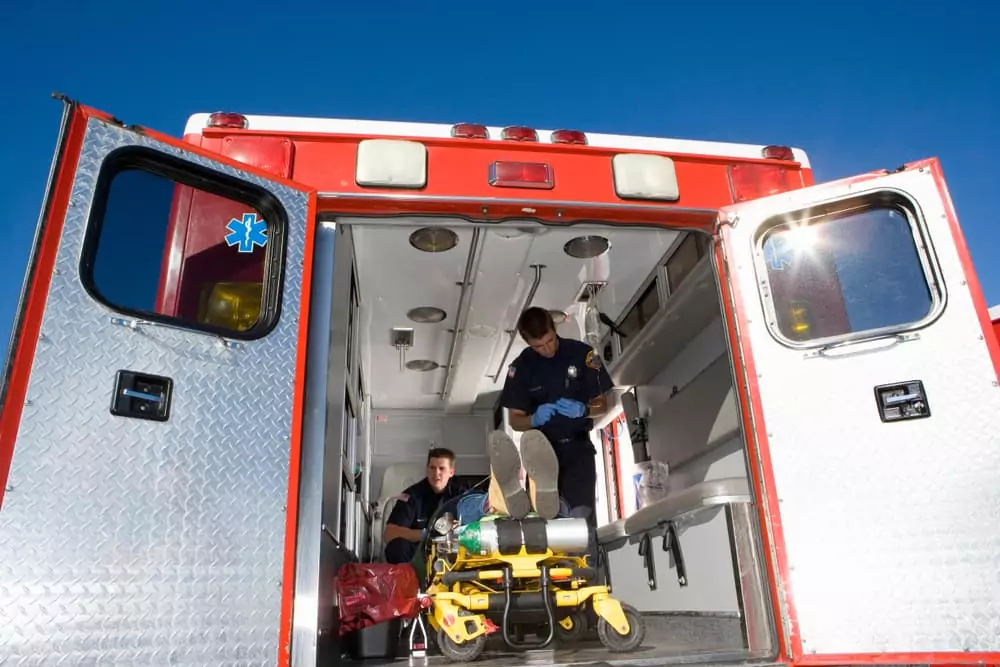
EMT negligence cases are complicated. This is why a victim or the victim’s family should seek the guidance of a South Carolina personal injury attorney with experience handling EMT negligence cases. The claims process will be complex, and having someone with experience handling the process will be less stressful.
- The EMT owed the patient a duty of care
- The EMT breached the duty of care
- Because of the breach, the patient suffered an injury or a worse condition
- The patient suffered financial losses because of the breach
Even once EMT negligence has been proven, things will still be complicated. Keep in mind that many EMTs are employed by government entities. The Tort Claims Act is the exclusive remedy for torts committed by government employees, and the government entity, not the individual EMT, is generally the defendant. The Act waives immunity, but it limits recovery to $300,000 per person and $600,000 per occurrence and does not allow punitive damages. These claims also have shorter deadlines, generally two years, so contact us promptly. An agency raising an immunity exception has the burden of proving it applies.
We will file a claim with an insurance company in most cases of EMT negligence. This may sound like a task that a victim could handle alone, which is not a good idea. The insurance company will make every attempt to minimize the claim for compensation.
Steps Victims of EMT Negligence Should Take
If you suspect EMT negligence, document what happened, obtain your medical records and EMS report, record your losses, report any serious misconduct, and promptly contact a lawyer.
When someone believes they are a victim of EMT negligence, there are some things that they can do to help improve their chances of being successful in filing a claim. Some of these include:
Victims should record their memory of the incident where an EMT was involved. This includes the date, approximate time, the reason for the EMT’s presence, and the outcome. This information establishes the connection between the victim’s current medical issues and the EMT’s treatment.
Obtain a copy of any medical records directly resulting from suspected EMT negligence. Our lawyers can review these records to demonstrate the injuries created by negligent conduct.
Victims of EMT negligence should carefully document their financial losses. These losses may include income loss, medical bills incurred due to negligence, and other related expenses.
Ask the agency for the patient care report, and ask your attorney to request the 911 call audio and dispatch times before they are lost.
The Department of Public Health certifies EMTs and paramedics and can investigate complaints and discipline certifications. A report does not replace a legal claim.
Cost of Hiring Our EMT Negligence Lawyers
- Retainer agreement: Hughey Law Firm accepts cases on a contingency basis. This means we do not require a victim to pay upfront once we have been hired. We do not collect any legal fees unless we successfully obtain a settlement on behalf of the victim.
- A settlement demand: We work closely with victims to prepare a fair settlement demand. We will pursue every legal option to secure compensation for a victim’s losses due to South Carolina EMT negligence.
- Regular communication: We know that not understanding what is happening with a case is frustrating. We will maintain open lines of communication with the victim so they know the status of their case.
- Negotiations: Once we prepare and submit a settlement demand, we will handle all negotiations for our clients. This allows the client to focus on recovering. We know how important this is, and we will share all counter offers made and help our client understand the pros and cons of each settlement offer.
- Preparation for court: Although few personal injury cases ever go to court, if we cannot negotiate a fair settlement through the insurer for EMT negligence, we can take the case to trial.
Contact the South Carolina EMT Negligence Lawyers at Hughey Law Firm
We serve clients in Charleston, Mt. Pleasant, Columbia, Myrtle Beach, and across South Carolina. The sooner you know your legal rights and options, the faster you can decide how to seek compensation for your losses and damages.

If you or a family member has suffered any condition worsened by EMT negligence or lost a loved one due to such negligence, contact Hughey Law Firm today by calling (843) 881-8644 or use our online contact form for your free consultation.
Past results do not guarantee future outcomes. The information on this page is for general informational purposes only and does not constitute legal advice.
Related Practice Areas
Frequently Asked Questions About South Carolina EMT Negligence Lawyer
Can I sue an EMT or paramedic in South Carolina?
Yes, if negligence caused harm. The claim is usually brought against the EMS agency that employed the EMT. If it is government-run, the Tort Claims Act applies.
Do EMTs have legal immunity in South Carolina?
Not completely. The Tort Claims Act waives immunity for government entities, with caps and exceptions. The agency has the burden of proving an exception applies.
How much can I recover from a government EMS agency?
Generally up to $300,000 per person and $600,000 per occurrence, with no punitive damages. These limits can change, so confirm them with an attorney.
What is the deadline for an EMT negligence claim?
Claims against government EMS agencies generally have a shorter deadline, often two years. Other claims generally have three years. Do not wait.
What counts as EMT negligence?
Failing to provide the care a reasonably trained EMT would, such as a slow response, using the wrong equipment, not giving oxygen, or giving the wrong medication, and that failure harms the patient.
Is a bad outcome always negligence?
No. Many emergencies end badly even with proper care. A claim requires proof that the EMT breached the standard of care and that the breach caused the harm.
What evidence matters most?
Medical records, the EMS patient care report, 911 call audio and dispatch times, and expert opinions on the standard of care.
Can I report an EMT to the state?
Yes. The Department of Public Health certifies EMTs and paramedics and can investigate misconduct complaints. A report does not replace a legal claim.
What if my loved one died?
Eligible family members may bring a wrongful death claim through the estate. Deadlines can be shorter for government EMS, so call promptly.
How much does it cost to hire Hughey Law Firm?
Nothing upfront. We work on a contingency fee basis, so you pay no attorney fees unless we recover compensation.