Who Is Responsible When a Nursing Home Resident Falls?
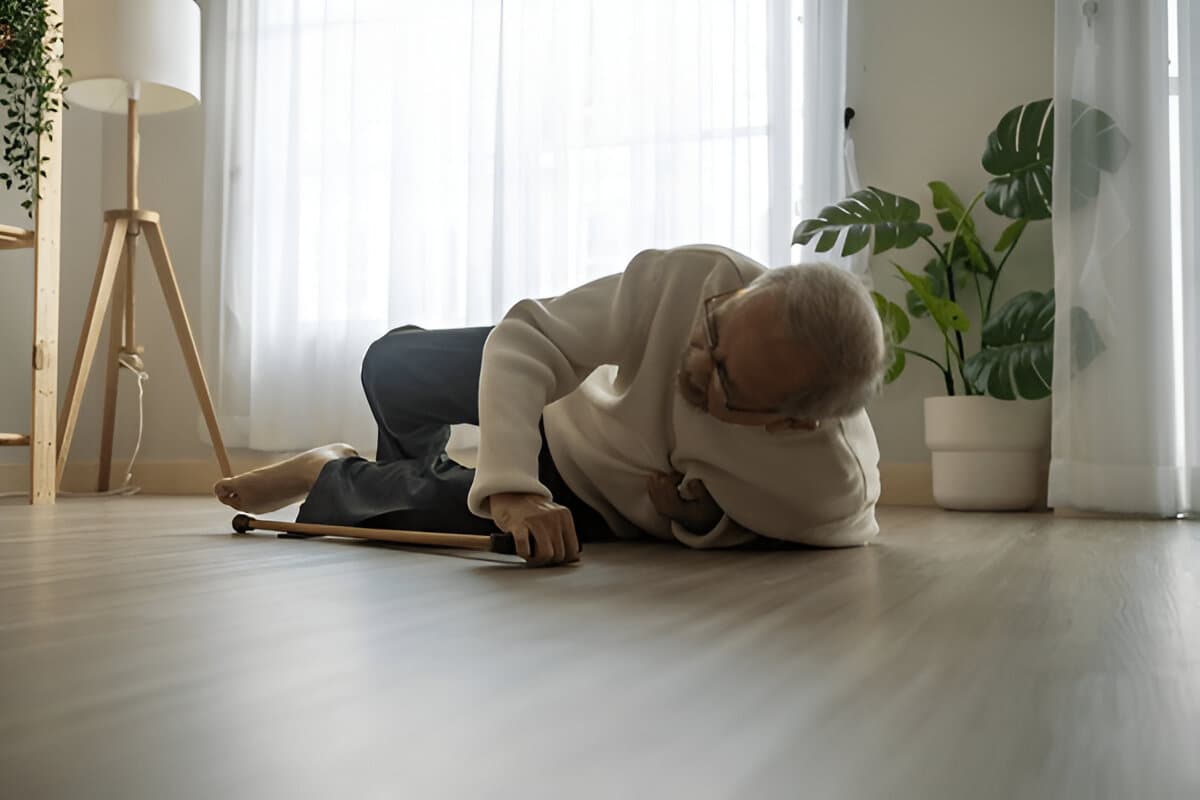
Nursing Home Abuse, Slip and FallIf you receive a phone call about your loved one being evaluated due to a fall and the staff member’s voice sounds calm and almost practiced, and the explanation sounds reasonable at first, but becomes vague when you start asking questions, it’s normal to have doubts. You’re told that falls happen. At this age, these things are difficult to prevent. This explanation is sometimes true, but it’s also sometimes a rehearsed response designed to divert you from a more difficult conversation about what the facility knew, what it was supposed to do, and what it chose not to do. Nursing home falls are the leading cause of injury-related death among adults over sixty-five in the United States, and many of them are preventable. When a fall occurs in a Charleston nursing home, you deserve a straightforward answer, not reassurance, to the question of who is responsible.
If your loved one was injured in a nursing home fall and something about the explanation you received doesn’t sit right, trust that instinct. Call (843) 881-8644 to schedule a free consultation, fill our contact form or connect through live chat to speak with our team.
Key Takeaways
- South Carolina nursing homes have a legal duty to assess the fall risk of each resident and implement individualized prevention measures.
- While not every nursing home fall is the result of negligence, many are, and this distinction is legally significant.
- Liability may extend to the facility itself, its corporate owners, individual staff members, and, in some cases, equipment manufacturers.
- Falls resulting in hip fractures, traumatic brain injuries, or death may support significant legal claims under South Carolina law.
- A nursing home injury attorney can review the facility’s records, care plans, and staffing history to determine if negligence played a role.
Do Nursing Homes Have a Legal Duty to Prevent Falls?
All licensed nursing homes in South Carolina are legally required to evaluate each resident’s risk of falling and create a personalized care plan to address it. This is not just a general best practice; it’s a regulatory obligation. According to federal nursing home regulations under the Nursing Home Reform Act, facilities must conduct thorough resident assessments upon admission, after any significant change in condition, and regularly thereafter. These assessments must identify fall risk factors, and the resulting care plans must include specific interventions tailored to each resident. A facility that performs a fall risk assessment and then ignores its own findings has not met its legal obligation. Nor has a facility that never conducted a proper assessment in the first place.
South Carolina’s Department of Health and Environmental Control (DHEC) inspections regularly cite facilities for fall-related deficiencies, and those citations are public record. Families and their attorneys can access a facility’s inspection history, and a pattern of prior fall-related violations carries significant weight in a legal claim.
What Makes a Fall the Result of Negligence Rather Than an Accident?
In a nursing home fall case, negligence means the facility failed to take reasonable steps to prevent a foreseeable fall. Most families get lost in this distinction, but it’s where the legal analysis actually begins. A fall that occurs despite proper assessments, individualized care plans, adequate staffing, functioning equipment, and careful execution of all required protocols is a very different situation from a fall that occurs because none of these things are in place.
Consider two residents. The first has a documented fall history, uses a walker, and requires staff assistance to transfer from bed to wheelchair. Their care plan requires two staff members to assist with transfers, bed rails to be raised at night, and hourly checks during the overnight shift. One night, a single aide attempts the transfer alone, the resident loses their balance, and they fall. The second resident has no prior fall history, is assessed as low risk, and unexpectedly falls during an independently attempted trip to the bathroom. The legal implications of these two situations are fundamentally different.
The first situation raises questions about whether the facility followed its own care plan and whether there was adequate staffing to do so. The second situation may be a genuinely unforeseeable event. A nursing home injury attorney evaluates the facts of each case against the obligations that applied to the resident in question. This analysis distinguishes a viable legal claim from a tragic but non-actionable event.
What Factors Contribute to Preventable Nursing Home Falls?
In nursing home settings, the most common contributors to preventable falls are inadequate staffing, improper equipment, failure to follow care plans, and environmental hazards:
- Inadequate staffing is a factor in nearly every preventable fall case. When a single aide is responsible for fifteen or twenty residents on an overnight shift, providing individualized attention becomes impossible. Residents who need help getting to the bathroom may try to do so alone because no one responds to the call light in time. Residents who require supervised ambulation will try to walk unassisted because no one is available to help them. The resulting fall isn’t random. It’s the predictable consequence of administrators prioritizing budget considerations over resident safety.
- Equipment failures represent a separate but related category. Examples include bed rails that do not lock properly. Call light systems may malfunction or be placed out of reach. There are also wheelchairs with worn or missing wheel locks, non-slip mats that were never replaced after deteriorating, grab bars were never installed in bathrooms used by residents with documented mobility limitations. Each of these issues represents a facility failure with a direct connection to fall risk.
- Environmental hazards such as wet floors without signage, poor lighting in hallways, cluttered pathways, and uneven flooring transitions fall into the same category. A nursing home that conducts regular safety checks and promptly addresses hazards meets its obligation. However, a facility that leaves known hazards unaddressed for weeks or months, particularly after prior incidents in the same location, doesn’t.
Failure to follow a resident’s care plan ties all of these issues together. A care plan that calls for non-slip footwear, a bed exit alarm, and a two-person assist during transfers is a written record of what the facility knew the resident needed. When staff do not follow the care plan, it becomes the most powerful piece of evidence against the facility.
Who Can Be Held Legally Responsible for a Nursing Home Fall?
Responsibility for a fall injury in a nursing home can extend beyond the individual staff member on duty to the facility itself, its management company, and its corporate ownership structure.
Many families don’t realize this, and it deeply affects the outcome of a legal claim. The aide working the night of the fall may have done everything possible given the impossible staffing ratio assigned to them. In that scenario, the negligence lies not with the individual caregiver, but with the administrators who set the staffing levels and the corporate ownership that approved the budget which made those levels inevitable.
South Carolina law allows plaintiffs to pursue claims against all parties whose negligence contributed to an injury. In nursing home cases, this often means naming the operating entity, the management company, and the real estate entity that owns the facility as separate corporate structures. Nursing home chains commonly structure their ownership to limit liability exposure. An experienced nursing home injury attorney knows how to investigate this type of ownership structure to ensure that the claim reaches the parties actually responsible for the decisions that caused the harm.
In cases involving defective equipment, the manufacturer of faulty bed rails, malfunctioning call systems, or wheelchairs with documented mechanical failures may also share liability under South Carolina product liability law.
What Injuries Result From Nursing Home Falls and How Serious Are They?
Falls in nursing homes cause some of the most serious and life-altering injuries in elder care. These injuries include hip fractures, traumatic brain injuries, spinal cord damage, and death:
- Hip fractures deserve particular attention. Studies show that approximately 20-30% of elderly patients who sustain a hip fracture die within one year, often due to surgical complications, postoperative pneumonia, blood clots, or the debilitating effects of prolonged immobility during recovery. For a frail nursing home resident, a hip fracture is not a recoverable nuisance injury. It’s often a death sentence delivered in stages, which is precisely why the legal consequences for a facility that allows a preventable fall to result in a hip fracture are severe.
- Traumatic brain injuries from nursing home falls can result in permanent cognitive impairment, loss of function, altered personality, and death. For residents already managing early-stage dementia, a traumatic brain injury can dramatically accelerate decline, erasing years of relative stability in a matter of weeks.
- The time between a fall and death isn’t always short. In the hardest cases for families, a loved one survives a fall but lives for months in pain and in a diminished state without the quality of life they had before. Then, they die from a complication directly connected to that injury.
South Carolina law recognizes these cases for what they are, and depending on the circumstances, both personal injury and wrongful death claims may apply. We can help you and your family in these cases. Contact us now by calling (843) 881-8644 to schedule a free consultation, fill our contact form or connect through live chat.
You deserve an answer. Let us help you find it!
A fall in a nursing home isn’t just something that happens. Most preventable falls result from a series of decisions regarding staffing, equipment, and whether to adhere to a care plan or cut corners during the night shift. These decisions can be traced back to specific individuals and choices. Your loved one deserved better. Families across Charleston, North Charleston, Mt. Pleasant, and throughout South Carolina have trusted Hughey Law Firm to ask the tough questions and hold those responsible accountable. We have recovered over $300 million in verdicts and settlements for the families we have had the honor of representing, and we’re ready to bring that same commitment to your case.
You and your loved one deserve a careful investigation led by professionals. Call (843) 881-8644 for a free consultation, fill out our contact form, or connect with our team through live chat.
Frequently Asked Questions
What if my loved one had a history of falls before moving into the nursing home?
Having a history of falls doesn’t reduce the facility’s responsibility. In fact, it increases it. Residents with a documented history of falls are higher-risk residents who require more careful assessments, more detailed care plans, and closer supervision. If a facility was aware of the resident’s history of falls and failed to implement adequate precautions, it has not met its duty of care.
Can we pursue a claim if our loved one has dementia and cannot describe what happened?
Yes. Claims involving nursing home injuries and residents with cognitive impairment are primarily based on documentary evidence, such as care plans, incident reports, staffing records, and nursing notes, rather than on the resident’s account. In many cases, the documentary record tells a clearer story than any witness could.
What if the nursing home says our loved one refused the offered assistance?
Facilities sometimes note resident refusals of care in their records. A nursing home injury attorney will examine closely whether that refusal was properly documented, whether staff made reasonable efforts to explain the risk, and whether the facility had appropriate protocols for residents who frequently refused assistance.
What if we have already settled with the nursing home’s insurance company?
If a settlement has been signed, it may be difficult or impossible to pursue further claims. Before accepting any settlement offer from a facility or its insurer, it’s strongly advisable to speak with an attorney. Insurance adjusters are skilled at reaching out to families quickly after an incident, before they have had time to understand the full extent of what happened.
How can we find out if a nursing home has been cited for fall-related violations before?
DHEC inspection reports for South Carolina nursing homes are publicly available. As part of an initial investigation, an attorney can access and review that history. Previous citations for fall prevention deficiencies at the same facility are strong evidence of a systemic problem rather than an isolated incident.
Disclaimer: This blog post is intended for general informational and educational purposes only and does not constitute legal advice. Every case is different. You should not act or refrain from acting on the basis of this content without consulting a licensed attorney. Statistics referenced regarding hip fracture mortality reflect published research and are cited for general educational

Nathan Hughey, an attorney and fourth-generation South Carolinian, founded Hughey Law Firm in 2007. Before that, he spent five years defending nursing homes and insurance companies. Leveraging his experience, he now advocates for those injured or wronged by such entities, securing over $300 million in verdicts and settlements.