
One of the most serious personal injury claims a person can bring is a traumatic brain injury caused by someone else’s negligence. Such injuries can permanently alter cognitive function, physical ability, emotional stability, and independence. When a crash on I-26, a fall on Charleston property, or any other negligent act causes this level of harm, the responsible party must be held accountable for the full extent of the harm caused.
The Hughey Law Firm represents victims of traumatic brain injuries and their families throughout Charleston, North Charleston, Mount Pleasant, and South Carolina. We handle high-value catastrophic injury cases, work with independent medical and expert witnesses, and pursue the maximum compensation available under South Carolina law.
Charleston Brain Injury Guide
- What Is a Traumatic Brain Injury?
- Brain Injury Statistics
- Common Causes of Brain Injuries in Charleston Accidents
- Who Can Be Held Liable for a Brain Injury?
- Damages Available in a Charleston Brain Injury Lawsuit
- How Much Is a Charleston Brain Injury Case Worth?
- Why Choose a Charleston Brain Injury Lawyer at Hughey Law Firm?
- What to Do After a Brain Injury Accident in Charleston
- How Long Do You Have to File?
- Proven Results in Brain Injury Cases
- Frequently Asked Questions
What Is a Traumatic Brain Injury?
A traumatic brain injury (TBI) is a disruption of normal brain function caused by a violent blow, jolt, or penetrating impact to the head. It can result in torn tissue, bruising, bleeding, and swelling, which can lead to lasting neurological, cognitive, and physical impairment.
TBIs range from mild concussions with temporary symptoms to severe injuries resulting in permanent disability or death. Even mild TBIs can cause chronic headaches, memory impairment, mood disturbances, and sensitivity to light and sound, which can significantly impact daily functioning and quality of life.
In personal injury cases, the legal significance of a TBI lies in its long-term consequences. Victims often require long-term medical care, rehabilitation, and occupational therapy. In serious cases, they need lifetime assistance with daily activities. These ongoing needs directly affect the total value of a damages claim and the evidence required to support it.
Brain Injury Statistics
According to the Centers for Disease Control and Prevention (CDC), traumatic brain injuries (TBI) account for approximately 223,050 hospitalizations and 60,611 deaths in the United States each year. Motor vehicle crashes are the leading cause of TBI-related deaths among individuals aged five to twenty-four. Currently, approximately five million Americans live with long-term or lifelong disabilities resulting from a brain injury.
These statistics are important for injury claims because they establish TBIs as a recognized and serious category of harm rather than a subjective complaint. Expert medical testimony supported by established clinical data is a central component of any serious TBI case.
Common Causes of Brain Injuries in Charleston Accidents
Traumatic brain injuries in Charleston result from various negligent acts. The most common causes that result in actionable personal injury claims are as follows:
- Vehicle crashes on I-26, I-526, US-17, and Savannah Highway, where high-speed collisions and truck accidents pose the greatest risk of traumatic brain injury (TBI). Motor vehicle crashes are the leading cause of TBI-related deaths among younger adults and children in Charleston, South Carolina.
- Slip-and-fall accidents at Charleston commercial properties, grocery stores, restaurants, and residential buildings, where negligent maintenance causes head contact with hard floor surfaces, are another common cause.
- Premises liability incidents occur at construction sites, workplaces, and public spaces throughout the Charleston metro area. These incidents occur when inadequate safety measures allow foreseeable injury to occur.
- Assaults and intentional acts where a third party’s direct physical conduct causes head trauma support both civil and criminal liability.
- Nursing home and care facility falls where inadequate supervision and failure to follow fall prevention protocols cause residents to sustain head injuries. Hughey Law Firm recovered a $250,000 judgment for a client who suffered a traumatic brain injury from a fall at a Charleston-area assisted living facility.
Past results do not guarantee future outcomes. Every case is different.
Who Can Be Held Liable for a Brain Injury?
Who is liable for a traumatic brain injury depends on the circumstances that caused the injury. Depending on the type of accident, multiple parties may share responsibility:
- Drivers who cause crashes due to negligence, recklessness, or impairment are personally liable..
- Property owners and businesses are liable when unsafe conditions on their premises cause a fall or other incident resulting in brain trauma.
- Employers and contractors are liable when workplace safety failures cause injury, including through workers’ compensation and third-party civil claims, where applicable.
- Nursing homes and care facilities are liable when inadequate supervision, fall prevention failures, or negligent care causes a resident to sustain a head injury.
- Product manufacturers may be liable for defective products when a defective vehicle component, safety equipment failure, or other product defect contributes to an injury.
Damages Available in a Charleston Brain Injury Lawsuit
According to South Carolina law, victims of traumatic brain injury may pursue compensation in the following categories.
- Economic damages cover verifiable financial losses, including medical expenses, hospitalization, surgery, rehabilitation, assistive devices, lost wages, reduced earning capacity, custodial care, and replacement domestic services.
- Non-economic damages compensate for pain and suffering, physical impairment, emotional distress, mental anguish, loss of enjoyment of life, and loss of consortium.
- Punitive damages may be available when the defendant’s conduct is reckless, wanton, or willful. Clear and convincing evidence of egregious conduct is required to obtain these damages, which are awarded in a minority of cases.
Because of the combination of high medical costs, permanent impairment, and long-term care needs, TBI cases frequently involve some of the largest damage awards in personal injury litigation. Accurately valuing these cases requires expert medical testimony, vocational assessments, and economic projections that account for the injury’s full lifetime impact.
How Much Is a Charleston Brain Injury Case Worth?
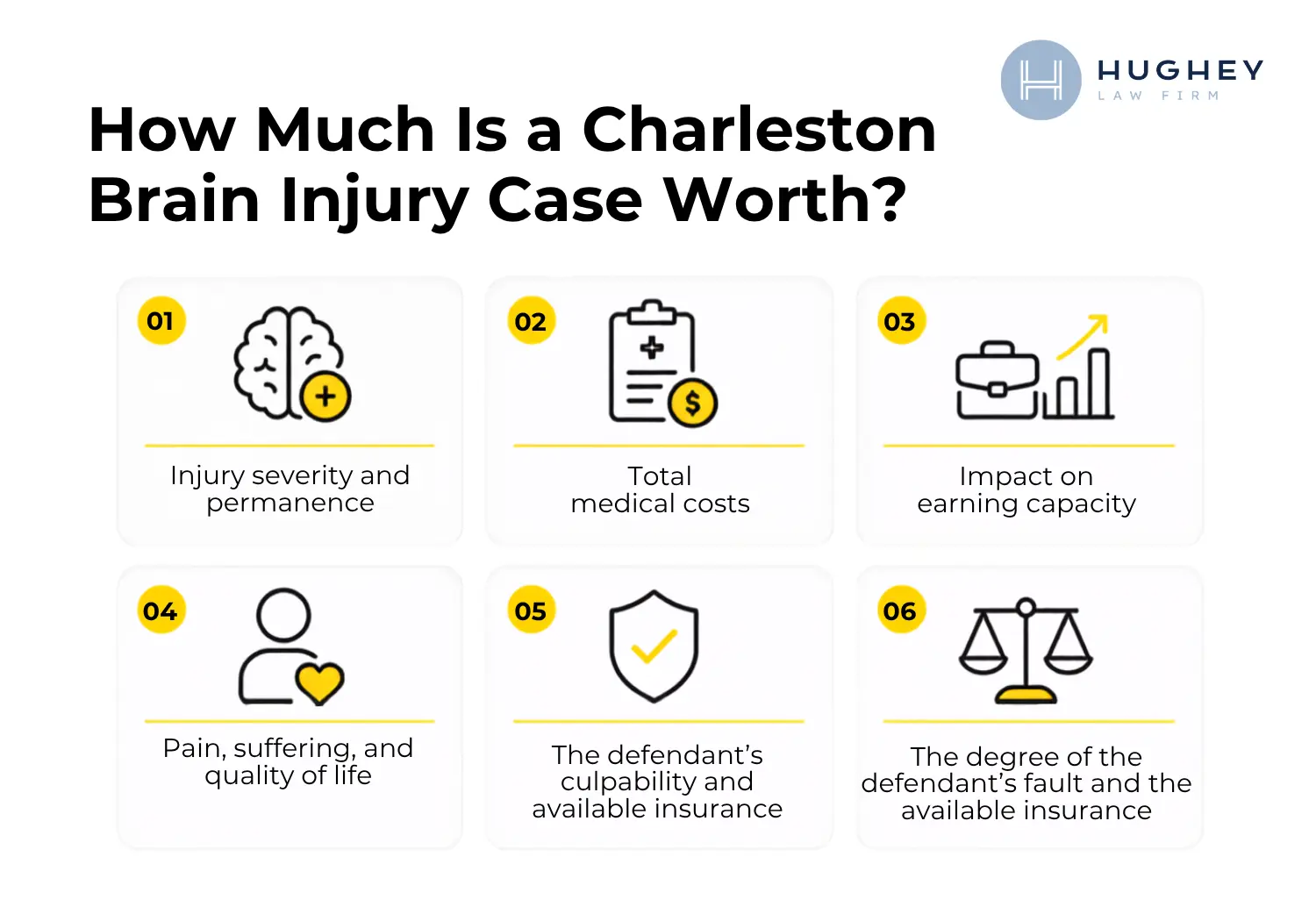
No attorney can tell you the exact value of a brain injury claim before conducting a thorough investigation. The value depends on several key factors:
- Injury severity and permanence
- Total medical costs
- Impact on earning capacity
- Pain, suffering, and quality of life
- The defendant’s culpability and available insurance
- The degree of the defendant’s fault and the available insurance
Hughey Law Firm evaluates each of these factors in detail, retains the appropriate experts, and builds the strongest possible case for maximum compensation.
Why Choose a Charleston Brain Injury Lawyer at Hughey Law Firm?
Cases involving traumatic brain injuries require a different level of legal preparation than standard personal injury claims. The medical complexity, high stakes, and insurance and litigation resources that defendants bring to these cases demand an attorney with experience representing clients with catastrophic injuries.
The Hughey Law Firm has secured millions of dollars for injured clients throughout South Carolina through negotiated settlements and jury verdicts. We collaborate with independent medical experts, neurologists, vocational specialists, and economic experts whose testimony illustrates the full financial impact of a serious brain injury on a victim and their family over a lifetime.
We handle TBI cases on a contingency fee basis. You pay no attorney fees unless we recover compensation for you. The initial consultation is free.
What to Do After a Brain Injury Accident in Charleston
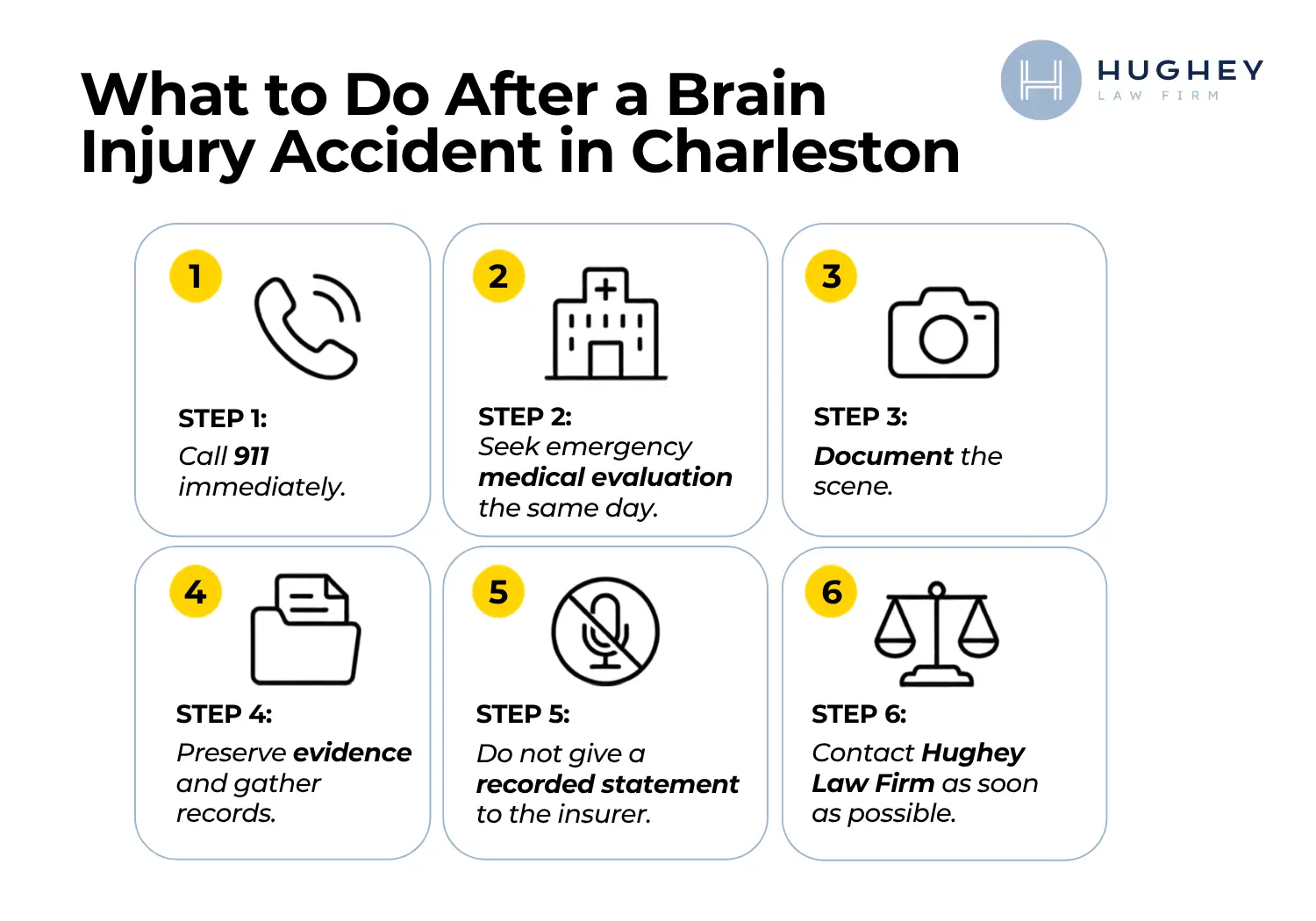
Here are the steps in detail:
- Step 1: Call 911 immediately.
- Step 2: Seek emergency medical evaluation the same day.
- Step 3: Document the scene.
- Step 4: Preserve evidence and gather records.
- Step 5: Do not give a recorded statement to the insurer.
- Step 6: Contact Hughey Law Firm as soon as possible.
How Long Do You Have to File?
In South Carolina, the statute of limitations for personal injury claims, including those involving traumatic brain injuries, is three years from the date of the accident. Missing this deadline will permanently eliminate your right to pursue compensation.
Since TBI cases require expert medical testimony, detailed documentation of damages, and thorough investigation, beginning the legal process as soon as possible results in the strongest case. The most reliable way to protect your rights and preserve the evidence your claim depends on is to contact an attorney promptly after the injury.
Proven Results in Brain Injury Cases
Hughey Law Firm has achieved significant outcomes for clients with traumatic brain injuries caused by the negligence of property owners, care facilities, and other responsible parties in Charleston and throughout South Carolina. The case below exemplifies our commitment to holding accountable those responsible for one of the most serious and life-altering injuries a person can sustain and to gathering the evidence necessary to demonstrate the full cost of a brain injury to a victim and their family.
$250,000 — Premises Liability / Traumatic Brain Injury
A client sustained a traumatic brain injury after falling at an assisted living facility in the Charleston area. The firm pursued a premises liability claim against the facility, establishing that the fall and resulting injury were the direct consequence of the facility’s failure to maintain safe conditions for its residents. The case resulted in a $250,000 judgment.
Traumatic brain injuries are among the most complex and consequential claims in personal injury law. The evidence required to support these claims demands both medical expertise and thorough liability investigation.
Hughey Law Firm approaches every brain injury case with the same standard: documenting the full scope of the harm, identifying every party responsible for it, and pursuing compensation reflecting the actual cost of the injury to the client, not just the immediate medical bills.
Past results do not guarantee future outcomes. Every case is different and must be evaluated based on its unique facts and circumstances. Hiring a lawyer is an important decision that should not be based solely on advertisements.
Reach Out to a Charleston Brain Injury Attorney Today
If you or a family member has suffered a traumatic brain injury due to someone else’s negligence in Charleston or anywhere else in South Carolina, the Hughey Law Firm is ready to investigate what happened, hire the necessary experts, and pursue the full compensation to which you are entitled.
Call (843) 881-8644 for a free consultation, fill out our contact form, or use live chat to speak with our team now. We represent families throughout Charleston, the Lowcountry, and across South Carolina.
Disclaimer: The information on this page is for informational purposes only and does not constitute legal advice. Every case is different. Past results do not guarantee future outcomes. Hiring a lawyer is an important decision that should not be based solely on advertisements. Ask us to send you free written information about our qualifications and experience before you decide. The Hughey Law Firm is located in Charleston, South Carolina.
Frequently Asked Questions
About Brain InjuryMost personal injury cases, including TBI claims, are resolved through settlement before trial. However, Hughey Law Firm prepares every case for trial from the outset. This preparation yields better settlement outcomes and ensures the firm is prepared to litigate when necessary.
Chronic headaches, memory impairment, mood and personality changes, cognitive slowing, depression, anxiety, and, in severe cases, permanent disability requiring lifetime care. These long-term consequences are a central component of TBI damage claims.
Yes. If another party’s negligence caused the accident that produced the brain injury, that party is liable for the resulting harm. The Hughey Law Firm handles traumatic brain injury (TBI) claims arising from vehicle crashes, slip and falls, premises liability, and other negligent acts throughout South Carolina.
This is common with TBIs. Delayed symptom onset does not eliminate your right to pursue a claim, but it makes prompt medical evaluation critical. It is essential to have a doctor document a connection between your symptoms and the accident, particularly when symptoms develop after the initial incident.
Yes. Even mild TBIs can cause chronic headaches, cognitive impairment, and emotional disturbances that impact daily life and earning potential. While the severity of the injury affects the total value of the claim, mild TBIs are still actionable if they are caused by another party’s negligence.