





About Grand Strand Medical Center
Common Causes of Hospital Negligence at Grand Strand Medical Center
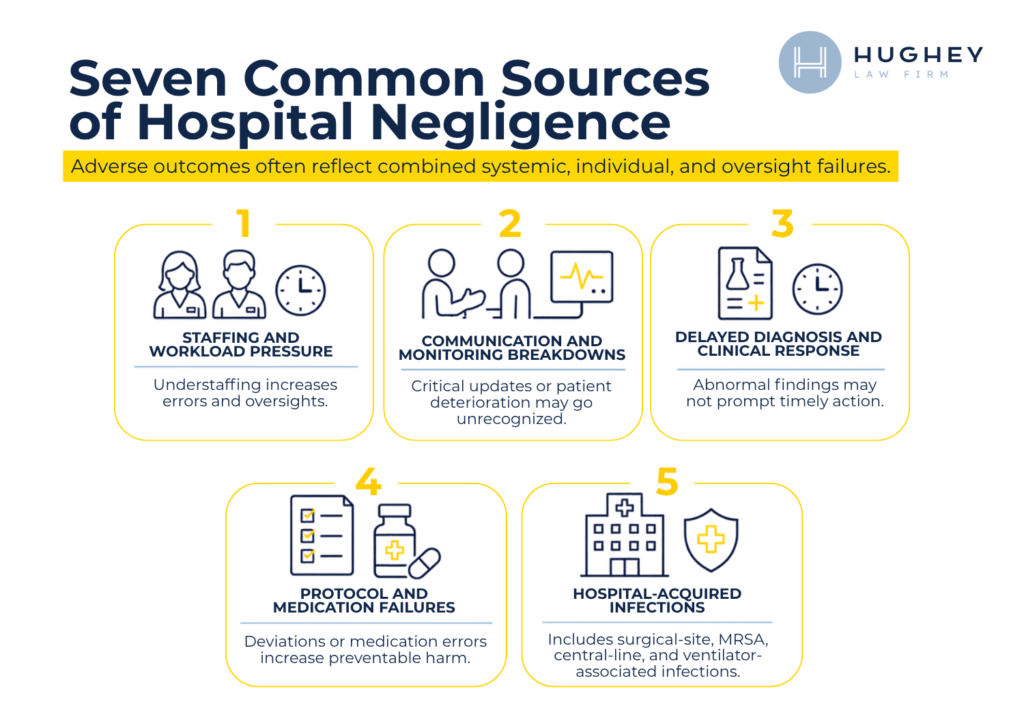
- Inadequate staffing and excessive workload: When a hospital’s staffing levels are insufficient for the volume and acuity of patients being treated, individual providers are stretched beyond what safe care requires. In a high-volume trauma center environment like Grand Strand Medical Center, where patient acuity can be severe and the pace of care is fast, understaffing creates conditions in which errors and oversights are more likely to occur.
- Communication failures between providers and departments: At a large acute care hospital, a patient’s care typically involves multiple physicians, nurses, specialists, and ancillary staff across several departments. Critical information, including medication allergies, changes in a patient’s condition, abnormal test results, and surgical findings, must be communicated accurately and completely during these transitions. When communication breaks down, the consequences can be serious.
- Failure to adequately monitor patients: Patients admitted for acute conditions, recovering from surgery, or receiving intensive care require monitoring that is appropriate for their clinical situation. If staffing or attentiveness falls short of what a patient’s condition requires, deteriorating conditions, including postoperative complications, internal bleeding, cardiac events, and developing infections, can go unrecognized until significant additional harm has occurred.
- Delayed diagnosis and failure to act on test results: In any busy hospital environment, the volume of laboratory results, imaging studies, and other diagnostic information flowing through the system creates a risk that significant findings will not be communicated promptly to the treating provider, or that the provider will fail to act on results requiring immediate attention. The time between an abnormal diagnostic result and an appropriate clinical response often comes under scrutiny in hospital negligence investigations.
- Failure to follow established protocols: Hospitals operate according to detailed clinical protocols for medication administration, infection control, surgical safety checklists, fall prevention, and many other aspects of patient care. When staff deviate from these protocols due to time pressure, inadequate training, or poor oversight, the risk of preventable patient harm increases substantially.
- Improper medication management: Medication errors, including incorrect drug selection, incorrect dosing, failure to identify contraindications, and administration errors at the bedside, are among the most common and preventable forms of hospital negligence. These errors can occur at any stage of the medication management process, from the physician’s order to pharmacy dispensing to bedside administration.
- Hospital-Acquired Infections: These are infections acquired during a hospital stay. They include surgical site infections, MRSA, central line-associated bloodstream infections, and ventilator-associated pneumonia. Proper protocols can often prevent these infections. If a hospital’s infection control practices fall below established standards and a patient develops a serious infection as a result, the facility may be liable for any resulting harm.
Hospital Negligence Claims We Handle
Compensation Available for Victims of Hospital Negligence
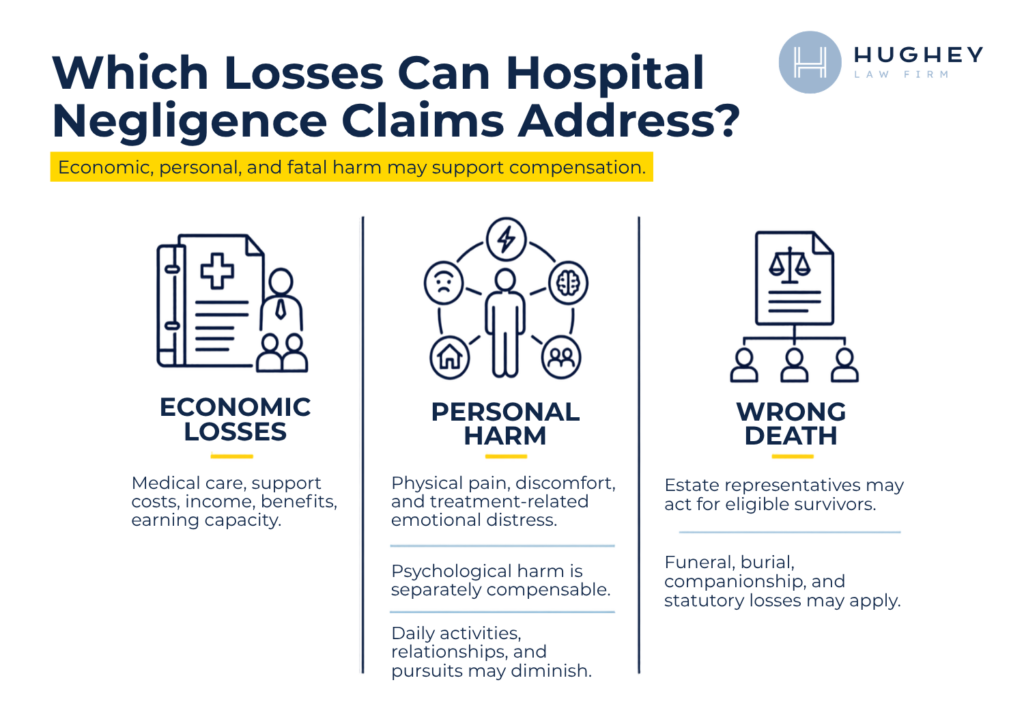
- Medical expenses cover the full cost of treating injuries, complications, and health problems caused or worsened by negligent care. This includes emergency treatment, additional hospitalization, corrective surgery, specialist care, prescription medications, rehabilitation, and any ongoing medical needs resulting from the harm sustained.
- Additional costs resulting from the adverse outcome are also covered, including home care services, transportation for ongoing treatment, adaptive equipment, and the expense of obtaining specialized care that is not available locally.
- Patients can also seek compensation for lost income and employment benefits, both past and future, for the time they were unable to work due to the harm caused by negligent care. Patients with permanent injuries affecting their ability to maintain their prior employment or earning level can also recover future economic losses.
- Pain and suffering compensation covers the physical pain, discomfort, and emotional distress caused by the negligent care and the treatment required to address the resulting harm. In most South Carolina personal injury cases, these damages are not subject to a statutory cap.
- Emotional distress reflects the psychological impact of being harmed by care that was intended to help. South Carolina law recognizes emotional distress as a distinct category of compensable harm.
- Diminished quality of life addresses the broader impact of the injury on a patient’s ability to engage in daily activities, relationships, and pursuits that defined their life before negligent care occurred.
- Wrongful death damages are available when hospital negligence causes a patient’s death. Under South Carolina law, the personal representative of the deceased patient’s estate may bring a wrongful death claim on behalf of eligible survivors. This claim may include compensation for funeral and burial expenses, loss of companionship, and other damages recognized under the state’s wrongful death statutes.
How Hughey Law Firm Supports Injured Patients and Families
- Thorough medical record reviews: We obtain and analyze the patient’s complete medical record from Grand Strand Medical Center, including physician orders, nursing documentation, medication administration records, operative reports, imaging results, and laboratory findings. Reviewing the full record chronologically allows us to identify where the standard of care was not met and what the clinical consequences were.
- Independent investigation: We independently investigate the circumstances surrounding the adverse outcome, including staffing levels, protocols, and systemic conditions at the hospital that may have contributed to the negligence. We also consider prior incident or complaint history relevant to the specific service line or department involved when establishing the facility’s awareness of a systemic problem.
- Medical expert coordination: South Carolina’s medical malpractice framework requires expert testimony that establishes two things: first, that the care provided fell below the accepted standard, and second, that the departure caused the patient’s harm. We collaborate with qualified medical experts in relevant specialties to develop the support necessary for the case and to meet the requirements of South Carolina law.
- Pre-suit compliance management: Before filing any lawsuit, we ensure full compliance with South Carolina Code Section 15-79-125’s pre-suit notice requirements, managing the timing and documentation of the notice so the claim is not jeopardized on procedural grounds.
- Comprehensive damages assessment: We evaluate the full scope of past and future losses our clients have experienced, including medical costs, income loss, and the personal impact of the injury. This ensures that any legal action pursues the maximum possible compensation.
- Insurance and defense communication: We handle all communications with the insurer and defense attorneys of Grand Strand Medical Center on behalf of our clients so that they are never placed in the position of negotiating with institutional representatives on their own.
- Negotiation and trial capability: We negotiate with the hospital’s insurer and defense counsel from a position of thorough preparation and a genuine willingness to take cases to trial. If a fair resolution cannot be reached, Hughey Law Firm will take the case to a South Carolina civil court. Thanks to our trial experience, every client we represent has access to skilled courtroom representation if their case requires it.
If you or a family member has been harmed due to negligent care at the Grand Strand Medical Center in Myrtle Beach, the Hughey Law Firm is prepared to review your case and explain your legal options. We represent patients and families throughout Horry County, the Grand Strand, and South Carolina. We are prepared to put our experience to work for you.
Call (843) 881-8644 for a free consultation, fill out our contact form, or use live chat to speak with our team now. The consultation is free, confidential, and carries no obligation to proceed.
Disclaimer: The information on this page is intended for general informational purposes only and does not constitute legal advice. Every case is different. Past results do not guarantee future outcomes. Hiring a lawyer is an important decision that should not be based solely on advertisements. Ask us to send you free written information about our qualifications and experience before you decide. The Hughey Law Firm is located in Charleston, South Carolina.