How to Protect Residents Better from Common Nursing Home Injuries
Nursing Home AbuseHaving handled hundreds of elder abuse cases in South Carolina, our attorneys at Hughey Law Firm have seen virtually every type of nursing home injury. Nursing home injuries affect thousands of elderly residents across South Carolina every year. Unfortunately, many of these injuries are preventable. The most common injuries we see happening in nursing homes include falls and fractures, pressure sores (bedsores), medication errors, infections, malnutrition, and injuries caused by physical abuse or neglect. In fact between 50 and 75 percent of nursing home residents fall each year, and roughly 1,800 die from fall-related injuries annually according to the Centers for Disease Control and Prevention (CDC).
Families in Charleston, Mt. Pleasant, and throughout South Carolina deserve to know what injuries to watch for, the warning signs of neglect, and the legal protections available to keep their loved ones safe. If you suspect a loved one has been harmed in a nursing home, reach out to talk to our nursing home abuse lawyers at Hughey Law Firm for a free consultation.
Why Nursing Home Injuries Are More Common Than You Realize
When families choose a nursing home for a parent, grandparent, or spouse, they trust that trained caregivers will provide attentive, compassionate care around the clock. That trust, unfortunately, is not always well placed. South Carolina currently has more than 188 licensed nursing facilities, and state regulators have levied millions of dollars in penalties for health and safety violations in recent years. Dozens of facilities have been cited for serious deficiencies, with numerous additional nursing homes having racked up extensive lists of minor violations.
And these are just the health and safety violations the State of South Carolina has found. A 2025 report from the U.S. Office of Inspector General found that 43 percent of serious falls in nursing homes were never reported, even when those falls caused major injuries requiring hospitalization. That means the data families rely on when choosing a facility don’t always reflect the true level of risk.
The question then is why? At the heart of many of these problems: understaffing. When a nursing home does not employ enough qualified caregivers, residents wait longer for help, injuries go unnoticed, and the overall quality of care declines. Understaffing is such a rampant problem that a 2022 study published in the National Institutes of Health (NIH) found that “87% of nursing homes have moderate to high levels of staffing shortages and hiring new staff has been challenging for 98% of nursing homes.”
The Most Common Nursing Home Injuries
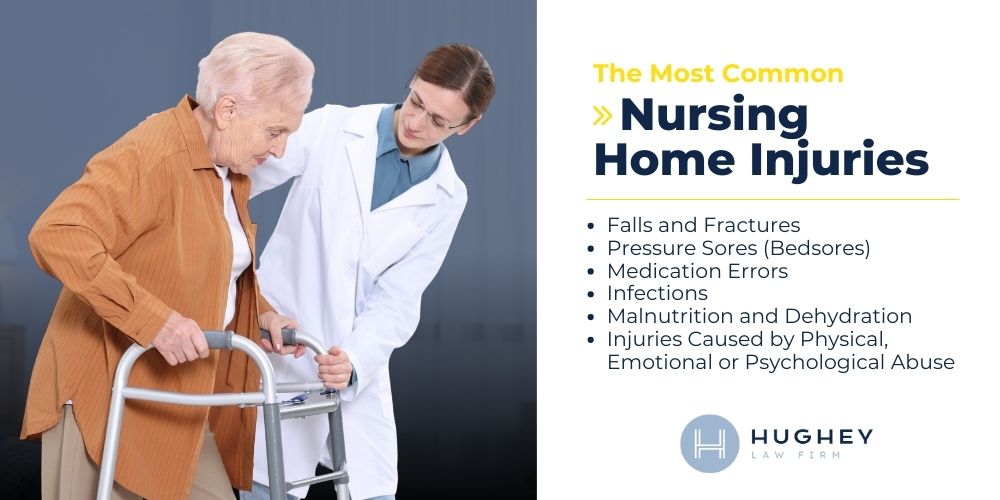
Not every injury in a nursing home is the result of intentional harm. Some stem from age-related health conditions, while others result directly from negligence or abuse. Understanding the most frequent types of nursing home injuries can help families identify problems early, understand what remedies are available, and take action before the situation worsens.
Falls and Fractures
Falls are the single leading cause of injury among nursing home residents nationwide. A typical nursing home with 100 beds reports between 100 and 200 falls each year. For elderly residents with weakened bones, a single fall can result in a hip fracture, broken wrist, head trauma, or spinal injury that permanently changes their quality of life. Many falls happen because of preventable hazards: slippery or cluttered floors, poor lighting, or beds set at the wrong height. Others occur because staff members either fail to or inadequately assist residents during transfers to the bed, wheelchair, or bathroom, or because medications that cause dizziness or sedation are not properly managed. The root cause of many of the above hazards and staff failures again falls back to understaffing.
Pressure Sores (Bedsores)
Pressure sores develop when a resident remains in the same position for too long without being repositioned. Elderly residents should be repositioned or turned every couple of hours, or as needed. When residents are not turned, the constant pressure restricts blood flow to the skin, causing it to break down. These wounds most often appear on the heels, tailbone, hips, and shoulder blades. Research suggests that roughly 10 to 11 percent of nursing home residents develop pressure ulcers. In their early stages, bedsores may simply look like reddened or irritated skin. Left untreated, they can deepen into open wounds that expose muscle and bone, creating a serious risk of infection, sepsis, and even death. Prevalence of bedsores is considered a strong indicator that a nursing home is failing to provide adequate care. As with falls and fractures, bed sores are often the result of understaffing or inadequate training.
Medication Errors
Nursing home residents often take multiple medications for chronic conditions, pain management, and mental health. With that complexity comes risk. Medication errors can include administering the wrong drug, providing an incorrect dosage, missing scheduled doses, or giving a resident medication intended for someone else. In some facilities, staff members overmedicate residents with sedatives or anti-anxiety drugs as a way to keep them quiet and compliant. Federal law strictly regulates the use of these chemical restraints, permitting them only as a last resort and only with a physician’s order. When a facility uses medication to control behavior rather than to treat a medical condition, it crosses the line into abuse.
Infections
Elderly residents are more susceptible to infections because their immune systems are often weakened due to age and chronic illness. Urinary tract infections (UTIs), respiratory infections, sepsis, and wound infections are all common in nursing home settings. Many of these infections are preventable with proper hygiene, timely wound care, and clean living conditions. When staff members fail to change wound dressings, neglect to assist residents with personal hygiene, or allow unsanitary conditions to persist, infections can spread quickly and become life-threatening. As we see in most issues with nursing homes, understaffing plays a huge role in the spread of infections among elderly residents.
Malnutrition and Dehydration
Adequate nutrition and hydration are fundamental to a resident’s health, especially for those recovering from surgery, managing chronic conditions, or dealing with cognitive decline. When nursing homes are understaffed, meal assistance falls through the cracks. Residents who need help eating or drinking may sit in front of their meals without anyone checking on them. Over time, the consequences become visible: rapid weight loss, sunken cheeks, dry skin, fatigue, and confusion. Facilities are required to monitor each resident’s dietary intake and nutritional status, and a failure to do so is neglect.
Injuries Caused by Physical, Emotional or Psychological Abuse
Most nursing home injuries are not caused by intentional harm but rather negligence on behalf of the facility and its staff. However, unexplained bruises, cuts, burns, restraint marks, or fractures in various stages of healing can point to a pattern of physical mistreatment. Additionally, while emotional and psychological abuse may not leave visible marks, the effects are just as damaging. Residents who were once social and engaged may become withdrawn, anxious, or fearful. As more and more studies show that socialization is key to longevity, these behavioral changes should never be dismissed.
Recognizing the Warning Signs of Neglect or Abuse
Nursing home abuse and neglect often go unreported because residents fear retaliation or lack the cognitive ability to describe what is happening to them. That places a critical responsibility on family members and visitors to stay alert. Warning signs to watch for during visits include untreated or worsening wounds and bedsores, frequent or unexplained falls, poor personal hygiene or soiled clothing, sudden and unexplained weight loss, repeated infections without a clear cause, personality changes such as increased anxiety or withdrawal, and reluctance to speak freely in front of caregivers.
If you notice any of these signs, document what you see. Take photographs, write down dates and descriptions, and keep records of every conversation you have with nursing home staff about your concerns. With many nursing homes taking substandard medical records, this documentation can become critical evidence if you later need to pursue a formal complaint or legal action.
How Families Can Protect Nursing Home Residents in South Carolina
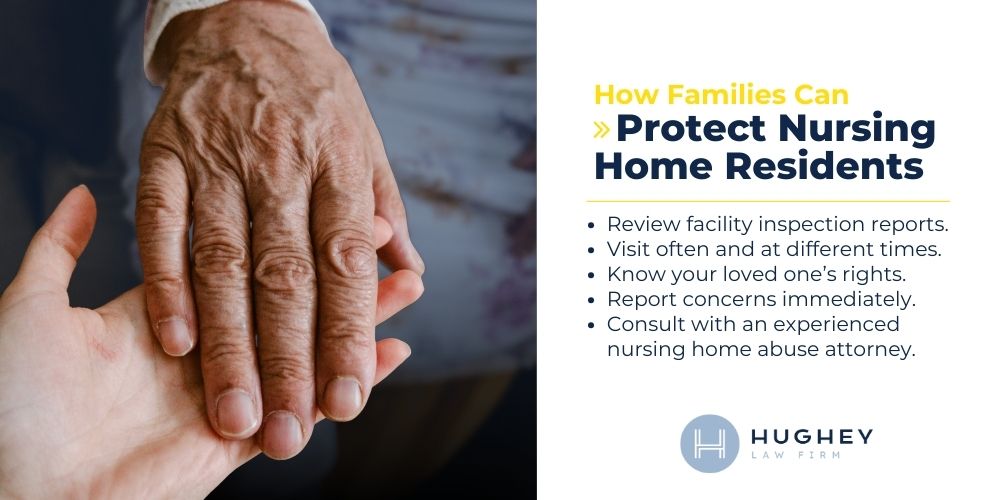
Protecting a loved one in a nursing home starts long before an injury occurs. Families should take several proactive steps to reduce the risk of harm and respond quickly if something goes wrong.
Review facility inspection reports. Prior to choosing a nursing home, research available nursing homes as best as you can. The Centers for Medicare and Medicaid Services (CMS) maintains a publicly available database that includes inspection results, staffing data, and quality ratings for every Medicare-certified nursing home in the country. Reviewing this information before choosing a facility, and periodically after admission, can reveal patterns of concern.
Visit often and at different times. Regular visits send a message to staff that someone is paying attention. Varying the times of your visits helps you observe conditions during different shifts, including evenings and weekends when staffing levels may be thinner.
Know your loved one’s rights. South Carolina’s Omnibus Adult Protection Act (SC Code § 43-35-5) classifies every resident of a nursing facility as a “vulnerable adult” and provides clear definitions of abuse, neglect, and exploitation. Under this law, anyone with actual knowledge that a vulnerable adult has been harmed is required to report it.
Report concerns immediately. If you suspect abuse or neglect, contact the South Carolina Long Term Care Ombudsman at 1-800-868-9095. If the abuse or neglect happened to a vulnerable adult in a community setting, you can report it to 1-888-CARE4US (1-888-227-3487). You can also report concerns to the South Carolina Department of Health and Environmental Control (DHEC), which is responsible for investigating complaints against licensed nursing facilities. In emergencies, call local law enforcement right away. All of these reports can and will be used by your attorney against the negligent nursing home.
Consult with an experienced nursing home abuse attorney. An attorney who focuses on nursing home injuries can help you understand your loved one’s legal options, investigate the circumstances of the injury, and pursue compensation for the harm your family member has suffered. At Hughey Law Firm, our attorneys have spent nearly two decades holding negligent facilities accountable across South Carolina.
Your Family Deserves Answers and Accountability

No family should ever have to wonder whether their elderly loved one is safe in a place that promised to care for them. When nursing home injuries result from neglect or abuse, the facility and its staff must be held responsible. Hughey Law Firm has secured hundreds of results for families affected by nursing home negligence, including many cases exceeding $1,000,000.
If you believe a loved one has been injured due to nursing home abuse or neglect anywhere in South Carolina, do not wait to act. Evidence may disappear, and South Carolina’s statute of limitations places a strict deadline on when you can file a claim.
Our consultations are free of charge. We happily review whatever medical records you provide, request additional records as necessary, and do our best to give you answers as to what happened to your loved one. If we decide you have a case, we do not collect a fee unless we recover compensation on your behalf.
Contact Hughey Law Firm today by calling (843) 881-8644, filling out the contact form on our website, or starting a live chat on our site.
Frequently Asked Questions About Nursing Home Injuries
What are the most common injuries in nursing homes?
The most common nursing home injuries include falls and fractures (particularly hip fractures and head trauma), pressure sores or bedsores caused by prolonged immobility, medication errors such as wrong dosages or missed doses, infections resulting from poor hygiene or untreated wounds, and malnutrition or dehydration tied to inadequate staffing. Many of these injuries are preventable with proper care and oversight.
How do I know if my loved one is being neglected or abused in a nursing home?
Warning signs of nursing home neglect or abuse include unexplained bruises, cuts, or fractures, untreated or worsening bedsores, sudden weight loss, poor personal hygiene, frequent infections, and behavioral changes like increased anxiety, withdrawal, or fear around certain staff members. If your loved one seems reluctant to speak openly during visits, that can also signal a problem. Document everything you observe and raise your concerns with the facility in writing.
How do I report nursing home abuse in South Carolina?
In South Carolina, you can report suspected nursing home abuse or neglect by contacting the Long Term Care Ombudsman at 1-800-868-9095. You may also file a complaint with the South Carolina Department of Health and Environmental Control (DHEC), which investigates violations at licensed facilities. If a resident is in immediate danger, call local law enforcement or 911 right away. Under the Omnibus Adult Protection Act, anyone with actual knowledge of abuse against a vulnerable adult is required to report it.
Can I sue a nursing home for injuries caused by neglect in South Carolina?
Yes. Families in South Carolina can file a civil lawsuit against a nursing home that caused or allowed injury through negligence or abuse. South Carolina generally allows three years from the date of the injury to file a personal injury claim (SC Code § 15-3-530), although specific circumstances may affect that timeline. A nursing home abuse attorney can evaluate the details of your situation and help determine the best path forward.
What compensation can families recover in a South Carolina nursing home abuse case?
Compensation in a nursing home abuse or neglect case may cover medical bills for treating the injuries, costs of relocating your loved one to a safer facility, pain and suffering, emotional distress, and basic living expenses. In cases involving extreme or willful misconduct, courts may also award punitive damages intended to punish the facility and deter similar behavior in the future.

Nathan Hughey, an attorney and fourth-generation South Carolinian, founded Hughey Law Firm in 2007. Before that, he spent five years defending nursing homes and insurance companies. Leveraging his experience, he now advocates for those injured or wronged by such entities, securing over $300 million in verdicts and settlements.