What Evidence Might Help My Car Accident Case?
Car AccidentFour categories of evidence determine whether a car accident claim succeeds in South Carolina:
- Physical evidence from the scene: Skid marks, debris fields, gouge marks in the asphalt, and photos of vehicle damage before repairs
- Digital forensics: Black box data showing speed and braking, cell phone records proving distraction, and surveillance footage from nearby cameras
- Medical documentation: Immediate treatment records and narrative reports from your doctor linking the crash to your specific injuries
- Official paperwork: The TR-310 police report (for witness names and diagrams) and any admissions the other driver made at the scene
South Carolina’s modified comparative negligence rule is why this evidence matters so much. If you’re found 51% or more at fault, you recover nothing. Insurance adjusters know this, so they’ll look for any argument to shift blame onto you. Solid evidence is what keeps your fault percentage as low as possible.
If you have a question about a recent accident in the Lowcountry, call Hughey Law Firm today. We will tell you whether the evidence supports a claim and what steps are necessary to preserve it before it disappears.
Key Takeaways for Your Car Accident Claim
- Physical evidence disappears quickly. Skid marks, debris, and even vehicle damage can be washed away, cleared, or repaired, so you must photograph and document everything immediately.
- South Carolina’s fault rules are strict. Under the state’s modified comparative negligence law, if you are found 51% or more at fault, you cannot recover any compensation for your injuries.
- Digital evidence requires a legal demand. Data from a vehicle’s black box or a driver’s cell phone is powerful but can be deleted; a formal Letter of Spoliation legally requires the other party to preserve it.
Understanding South Carolina’s Fault Threshold
Before we discuss what evidence you need, you have to understand why you need it. The reason lies in a legal concept called the preponderance of the evidence. You don’t need 100% proof. You just need enough evidence to tip the scales to 51% in your favor.
However, the risks are high because of South Carolina’s modified comparative negligence rule. This is the framework that governs every payout in the state.
The 51% Rule
Under this rule, if a jury or adjuster finds you are 51% or more at fault for the accident, you recover $0. Despite being in thousands of dollars in medical bills, if you are found slightly more to blame than the other driver, you have to pay for all of it yourself.
However, if you are found to be partially at fault, but less than 51%, your compensation is reduced by your percentage of fault.
The Shared Fault Trap
This rule is why evidence is so valuable. Insurance adjusters know that if they could pin even a small percentage of blame on you, they save money. If they can pin 51% on you, they save all the money.
Solid evidence is the only tool that might keep your assigned fault percentage at 0%. Without it, it becomes your word against theirs, and that is a gamble you usually want to avoid.
Physical Evidence at the Scene
Adrenaline, trauma, and time all distort what we remember. Physical evidence, however, is objective.
Skid Marks and Gouge Marks
We can tell a lot about a crash based on the marks left on the road. Accident reconstructionists look for:
- Skid marks: These indicate braking points. The length of the skid mark may be used to mathematically calculate the minimum speed the car was traveling. If a driver claims they were going 35 mph but left 150 feet of skid marks, the math proves they are lying.
- Gouge marks: When cars collide with force, metal parts sometimes dig into the asphalt. These gouges mark the exact Area of Impact. This is helpful in head-on collisions where both drivers claim the other crossed the center line. The gouge marks don’t lie about where the impact happened.
Debris Fields
When plastic headlights, glass, and metal trim shatter, they don’t land randomly. They follow the momentum of the crash, and the spread of this debris may prove the angle of impact. On narrow Charleston roads, this is frequently the deciding factor in proving a driver drifted out of their lane.
Vehicle Damage Patterns
We analyze crush profiles to determine force and angle. A T-bone accident leaves a very different structural imprint than a sideswipe. If the other driver claims you merged into them, but the crush depth on your car indicates a direct 90-degree impact, the physical metal contradicts their story.
The Urgency of Photos
If you are at home now, it might be too late to get photos of the transient evidence like skid marks, but you must secure photos of the vehicle immediately.
Do not authorize repairs until high-resolution photos of the damage, both structural and cosmetic, are taken. Once the body shop starts fixing the car, that evidence is gone forever.
In Charleston, factors like flooding, construction signage, or overgrown vegetation change rapidly. If a stop sign was obscured by a bush on the day of the crash, the city might trim that bush a week later. You ideally need a photo of the road conditions as they were on the day of the crash.
Electronic Data and Digital Forensics
Event Data Recorders (EDRs)
Commonly known as black boxes, these devices are installed in most post-2013 vehicles. They are triggered by a crash event and record the data from the few seconds leading up to impact.
The EDR may reveal:
- Vehicle Speed: Precise velocity, not an estimate.
- Brake Application: Did the driver slam on the brakes, or did they not brake at all? (A lack of braking typically indicates they were not looking at the road).
- Steering Angle: Did they swerve?
- Seatbelt Use: Were they buckled in?
Cell Phone Records
Distracted driving is a leading cause of accidents, but proving it requires more than a suspicion. To prove it, we look beyond simple call logs and look for data usage patterns.
- Text Timestamps: Was a text sent or received at the exact moment of impact?
- Social Media Activity: Was the Facebook or Instagram app refreshing data?
- Screen Activity: Some forensic data might show if the screen was unlocked and active.
Surveillance Footage
In an urban area like Charleston, you can rarely go about your day without being observed. Ring doorbells, local business security cameras, and traffic cameras may have captured the crash.
However, the problem is that these tapes are typically overwritten within 48 to 72 hours. If you wait a week to ask for the footage, it is likely gone.
The Letter of Spoliation
You generally may not access this digital data on your own. You need a legal tool called a Letter of Spoliation.
This is a formal legal demand sent to the other driver, their insurance company, or the trucking company. It puts them on notice that a claim is pending and that they have a legal duty to preserve all evidence, including the vehicle itself, the black box data, and driver logs. If they destroy the evidence after receiving this letter, the court may sanction them heavily.
This letter must be sent immediately, but you can’t do it without legal counsel. If you haven’t sent one yet, call us.
The Official Record: Police Reports and FR-10 Forms
The FR-10 (Insurance Verification)
At the scene, the officer likely handed you a green form (or a white printout) called the FR-10. This is not the accident report. It is strictly for insurance verification. You must fill out your portion and submit it to the SCDMV (and your insurance carrier) within 15 days.
Do not ignore this deadline. If you fail to turn it in, the state may suspend your license, assuming you are uninsured.
The TR-310 (Traffic Collision Report)
The actual accident report is the TR-310. This is the document where the officer draws the diagram, lists witness names, and issues citations. While this document is useful for opening an insurance claim, it has a major limitation in court.
The Hearsay Rule
In South Carolina civil courts, the police report is generally inadmissible as evidence of negligence.
Why? Because it is considered hearsay. The police officer was not there when the crash happened. Therefore, their opinion on who caused the crash is just an opinion. You should not walk into a courtroom, wave the police report, and expect to win.
The report is a roadmap to find witnesses and data, not the final verdict. We use it to locate the people who were there, but we do not rely on the officer’s conclusions to prove your case.
Form FR-309
If the accident was minor, or happened on private property (like a grocery store parking lot), the police might not have filled out a TR-310. In this case, you must file Form FR-309 (Traffic Collision Report – Not Investigated by Law Enforcement) if there is over $1,000 in damage or any injury. This creates an official record where none existed before.
Medical Evidence Linking the Crash to the Injury
Proving the other driver hit you is only the first step. The second step is proving that the collision caused your specific injuries.
Insurance companies may admit their driver was negligent, but they will argue that your back pain is from degenerative disc disease or old age, not the crash.
The Importance of Timing
Gaps in treatment are fatal to a claim. If you wait two weeks to see a doctor because you thought it would go away, the adjuster will use that two-week gap as evidence that you weren’t really hurt. Always get immediate treatment records to create a temporal link between the crash and the injury.
Narrative Reports vs. Billing Codes
Standard medical records are just lists of billing codes (CPT codes), which are useless for proving causation. We advise getting narrative reports from your physician.
A narrative report is where the doctor explicitly states that your injury is more likely than not a result of the trauma from the collision. It connects the mechanics of the crash (e.g., forceful hyperextension of the neck) to the diagnosis (cervical strain).
Transparency with Prior History
If you had a bad back before the accident, do not hide it. The insurance company will find your old records. The key is to distinguish between the pre-existing condition and the aggravation caused by the crash.
South Carolina law protects you here. You are entitled to compensation if a crash makes a stable condition unstable or painful. To do this, we will use precise medical evidence distinguishing before from after.
Establishing Liability in Difficult Scenarios (DUI & Dram Shop)
South Carolina has historically high rates of traffic fatalities involving impairment. When a drunk driver hits you, the evidence gathering extends beyond the road.

DUI Evidence
In these cases, we look for field sobriety cam footage, toxicology reports, and dashcam video from the arrest. But frequently, the driver has minimal insurance limits ($25,000). This is where Dram Shop liability comes in.
Dram Shop Liability (The Bar’s Role)
If a bar or restaurant served the driver while they were visibly intoxicated, the establishment may be liable for your damages. However, recent changes in South Carolina law have raised the bar for what you must prove.
The New Standard (Effective Jan 1, 2026)
Recent legislative updates (the Justice Act) have shifted how liability is shared. Establishments are no longer automatically on the hook for the full amount if they are found to be just 1% at fault. Now, liability is generally capped at 50% for the establishment unless specific criteria are met.
Furthermore, the standard relies heavily on proving the driver was visibly intoxicated at the time of service. We will need evidence such as:
- Receipts and Credit Card Timestamps: To calculate how many drinks were served in what timeframe.
- Witness Testimony: People inside the bar who saw the driver stumbling or slurring.
- Internal Video Security: Footage from inside the bar showing the service of alcohol to an unsteady patron.
FAQ for Car Accident Evidence in South Carolina
Can I use my own dashcam footage as evidence?
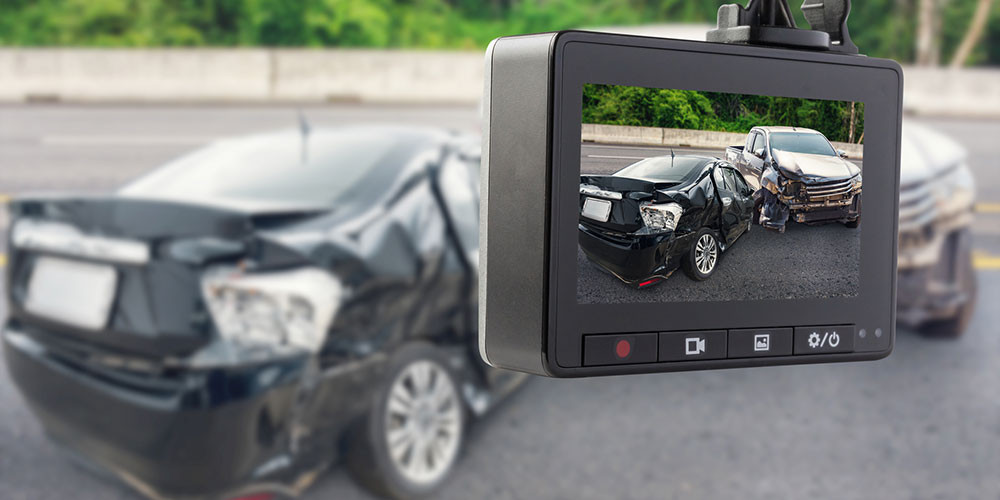
Yes, dashcam footage is highly persuasive. However, you must preserve the raw file. Do not edit it or clip it. The metadata on the original file is needed to prove it hasn’t been altered.
What if the other driver admitted fault at the scene but changed their story later?
This happens. Drivers calm down, talk to their spouse or insurance agent, and realize they should stop apologizing. If a witness heard the admission, that testimony is admissible. If it’s just your word against theirs, we will use the physical evidence, such as skid marks and damage points, to override their new story.
The at-fault driver was uninsured. Does evidence still matter?
Yes. If you are claiming Uninsured Motorist (UM) coverage from your own policy, your insurance company effectively steps into the shoes of the defense. They will still require you to prove the other driver was at fault before they pay out the claim.
How long do I have to gather evidence?
While the statute of limitations for filing a lawsuit is generally 3 years (2 years if a government vehicle caused the crash), the evidence itself has a much shorter shelf life. Video footage is often deleted in days; skid marks fade in weeks. You should always act immediately.
Let Us Handle the Evidence While You Recover
The success of a car accident claim in Charleston usually comes down to what happens in the first few weeks after the crash, not what happens in the courtroom years later.
Call Hughey Law Firm today to discuss your accident. We will review the available evidence, issue the necessary preservation letters, and help you understand your options for recovery.

Nathan Hughey, an attorney and fourth-generation South Carolinian, founded Hughey Law Firm in 2007. Before that, he spent five years defending nursing homes and insurance companies. Leveraging his experience, he now advocates for those injured or wronged by such entities, securing over $300 million in verdicts and settlements.