What Happens If You Get Sideswiped in South Carolina? Can I Get Compensation?
Car AccidentThree things happen after a sideswipe collision in South Carolina:
- The claim becomes a credibility battle. Unlike rear-end collisions where fault is usually obvious, sideswipes often devolve into he-said-she-said disputes. Without objective evidence, insurance adjusters default to assigning both drivers a share of the blame.
- The insurance company looks for ways to push fault onto you. Under South Carolina’s modified comparative negligence rule, if they can argue you were 51% responsible (maybe you failed to signal, were speeding, or lingered in a blind spot) you recover nothing.
- You may have injuries that don’t match the vehicle damage. Sideswipes create rotational forces that your car’s front and rear crumple zones aren’t designed to absorb. Spinal injuries, concussions, and annular tears can result from crashes that leave only scraped paint on the door panel.

The key to winning a disputed sideswipe claim is physical evidence: the direction of scrape patterns on the metal, the location of the debris field relative to lane lines, and black box data showing your steering wheel was straight at impact. This evidence establishes lane dominance—proof of which driver had the legal right of way under South Carolina Code § 56-5-1900 and which one crossed the line.
If you’re dealing with a disputed sideswipe claim or an insurer suggesting you were partially at fault, contact Hughey Law Firm. We’ll analyze the physical evidence and help you determine if your case meets the threshold for full compensation.
Key Takeaways for Sideswipe Accidents
- Physical evidence is paramount in proving fault. Because sideswipe accidents become he-said-she-said arguments, objective data like scrape patterns, debris fields, and black box recordings are necessary to establish which driver crossed the lane line.
- South Carolina’s comparative negligence rule can bar your recovery. If you are found to be 51% or more at fault for the collision, you are entitled to nothing. This makes it essential to fight any incorrect assignment of blame by the insurance company.
- Minor vehicle damage does not mean minor injuries. The lateral, twisting forces in a sideswipe can cause severe spinal injuries even if the car only has scraped paint, a fact insurance adjusters may try to ignore.
Proving Fault in He-Said-She-Said Scenarios
The most anxiety-inducing aspect of a sideswipe accident is the realization that there are no neutral witnesses. You know you stayed in your lane, but the other driver is telling the police officer and their insurance company that you were the one who drifted.
The Ambiguity of Lane Changes
Proving fault requires us to establish lane dominance. This legal concept defines which vehicle was fully established in the lane and which was encroaching upon it at the moment of contact.
A common defense tactic in these scenarios is the blind spot argument. The opposing counsel or adjuster may argue that you drifted into the defendant’s blind spot, making the collision inevitable or at least partially your fault. This shifts the focus from their client’s failure to check the lane to your positioning.
The Shared Fault Trap in Police Reports
When law enforcement arrives at the scene of a sideswipe, they rarely have a clear picture of what happened. Unless the officer witnessed the crash, they are relying on statements from two shaken drivers.
Consequently, many police reports list contributing factors for both drivers. They might cite one driver for an improper lane change but list driver inattention for the other. Even if you receive no citation, the lack of a definitive statement in the report gives the opposing insurance company leverage. They will argue that without independent verification, they must assume both parties drifted.
The Solution: Objective Physical Evidence
We do not rely on the other driver’s conscience to get to the truth. We rely on physics. Even in a minor sideswipe, the marks on the vehicles leave a story behind that experts can read.
- Scrape Patterns and Striations: The angle and depth of the striations reveal relative motion. If the scratches run from the front of your door toward the back, it indicates the other vehicle was moving faster and overtaking you. If the metal is pushed inward specifically at the wheel well, it suggests a sudden lateral merge by the other party.
- Debris Fields: When side mirrors or light covers shatter, the glass falls to the road. The settling point of this debris indicates the exact point of impact (POI) relative to the lane lines. If the glass is centered in your lane, it is strong evidence that the impact occurred in your territory.
- Yaw Marks: Unlike standard skid marks which are straight, yaw marks are curved. They occur when a tire is rotating and sliding sideways simultaneously. These marks reveal a sudden steering correction. If we find yaw marks from the other vehicle crossing the centerline, it serves as physical proof of a lane violation under South Carolina Code § 56-5-1900.
Why Minor Sideswipes Cause Major Physical Injuries
There is a disconnect between the visual damage to the car and the physical damage to the occupant. You might look at your vehicle, see only scraped paint or a dented panel, and wonder why you are in so much pain. Insurance adjusters may also point to the lack of crushed metal to argue that your injuries cannot be severe.
The Biomechanics of Lateral Impact
This argument ignores basic biomechanics. Modern vehicles are designed with crumple zones in the front and rear to absorb energy. The sides of vehicles, however, are much stiffer. Furthermore, the human body is designed to handle forward motion better than lateral motion.
In a sideswipe, the force is typically rotational. The impact spins the car, or at least jolts it sideways. Your body, strapped in by a seatbelt designed primarily for frontal impacts, is subjected to violent twisting or side-to-side snapping. This lateral whiplash is difficult for the cervical spine to absorb.
Delayed Onset Symptoms
Because of the adrenaline spike immediately following a crash on the highway, many people might not feel pain instantly. This is why symptoms commonly manifest 24 to 72 hours later. The impact could cause significant internal issues, including:
- Cervical Strain: The snapping motion stretches the tendons in the neck beyond their limit.
- Annular Tears: The rotational force can cause small tears in the outer layer of the spinal discs, which are incredibly painful and difficult to diagnose without an MRI.
- Mild Traumatic Brain Injury (Concussion): You do not need to lose consciousness to suffer a concussion. In a sideswipe, your head may strike the side window or the B-pillar (the post between the front and back doors).
Always seek a full neurological or orthopedic evaluation, even if you were cleared by an emergency room initially. ERs focus on life-threatening conditions; they miss soft tissue pathology that leads to chronic pain. Medical documentation creates the necessary link between the crash and your injury.
The Adjuster Is Implying I’m Partially to Blame. What Now?
One of the most specific risks in a sideswipe case is the financial threat of being found partially responsible. South Carolina operates under a modified comparative negligence standard, codified in South Carolina Code § 15-38-15.

How the 51% Rule Works
Under this system, you may recover damages only if your fault is not greater than the defendant’s. In practical terms, this means if a jury or insurance adjuster decides you are 50% at fault, you can still recover compensation, though it will be reduced by half. However, if you are found to be 51% at fault, you recover nothing.
Common Allegations of Plaintiff Fault
The defense attorneys and adjusters’ goal is to find enough evidence to push your liability percentage over that 50% threshold. To do this, they will investigate specific statutory violations:
- Failure to Signal: Under SC Code § 56-5-2150, drivers must signal continuously for at least 100 feet before changing lanes. If you merged without signaling, or signaled too late, they will argue you share the blame.
- Speeding: Even if the other driver hit you, if data shows you were driving significantly above the speed limit, they will argue you lost the right of way.
- Distracted Driving: They may subpoena cell phone records to see if data was being transferred (texting or app usage) at the moment of the lateral move.
The Insurance Evaluation Process for Sideswipe Claims
Standardized Software and Algorithms
Most large insurers use valuation software, such as Colossus, to determine settlement offers. The adjuster inputs damage codes and medical billing codes, and the algorithm outputs a value range.
Sideswipe damage codes trigger automatic flags for potential comparative negligence. The software prompts the adjuster to investigate shared fault because, statistically, sideswipes involve two moving vehicles. This is why it’s not uncommon for victims to initially receive a determination that you shared some fault for the accident.
The Investigation Phase
During the investigation, the adjuster looks for specific evidence to manage the claim’s cost. They will review recorded statements carefully. If a driver admits, “I didn’t see him until he hit me,” the adjuster may interpret this as a failure to keep a proper lookout, rather than proof the other driver came out of nowhere.
This creates a power imbalance. Insurance carriers handle thousands of sideswipe claims annually. They know which phrases shift liability percentages in their favor. You, on the other hand, are likely handling this for the first time.
Our role as sideswipe accident lawyers is to level this playing field, ensuring that the evidence is interpreted fairly and that your statement is not misinterpreted into an admission of guilt.
Commercial Vehicles: When a Truck Sideswipes You
When the vehicle that hits you is an 18-wheeler or commercial delivery truck, the stakes and the rules change considerably. The size difference alone results in more severe vehicle damage and injury, but the legal standards for commercial drivers are also higher.
The No-Zone Defense
A frequent defense in trucking sideswipes is that the passenger vehicle was hanging in the truck’s blind spot, or No-Zone. The defense will argue that the truck driver could not see you and that you were negligent for remaining in a dangerous position.
However, professional drivers hold a Commercial Driver’s License (CDL) and are held to a higher standard of care. They are trained to manage their blind spots and clear lanes before merging. The existence of a blind spot is not a valid excuse for merging into an occupied lane.
Electronic Logging Devices (ELDs) and Telematics
Proving fault in these cases involves securing the truck’s data. Modern commercial trucks are equipped with Electronic Logging Devices (ELDs) and telematics systems. These systems track lane departures, sudden steering movements, and speed.
We can obtain data showing the truck driver was drifting or correcting their steering long before the impact occurred, suggesting fatigue or distraction. Furthermore, under the doctrine of vicarious liability, we look to hold the trucking company liable for their driver’s negligence, which typically triggers much larger insurance policies than standard auto coverage.
Gathering Evidence After the Fact (From Home)
If you have already left the scene of the accident, you may worry that it is too late to gather evidence. That is rarely the case. There are steps you can take from home to strengthen your position.
Event Data Recorders (Black Boxes)
Most modern passenger cars contain an Event Data Recorder (EDR). This black box records vehicle parameters in the 5 seconds leading up to a crash. It captures speed, brake application, and crucially, steering input. If the other driver claims you drifted into them, your EDR data may prove your steering wheel was held straight at the moment of impact.
Public and Private Surveillance
Consider the location of the accident. It may have occurred near a gas station, bank, or major intersection with security cameras facing the road. Many South Carolina intersections are also equipped with DOT traffic cameras.
The urgency here is data retention. Security systems typically overwrite footage every 7 to 30 days. We can send preservation letters to these entities to ensure the footage is saved, but we must act quickly.
Vehicle Repair Estimates
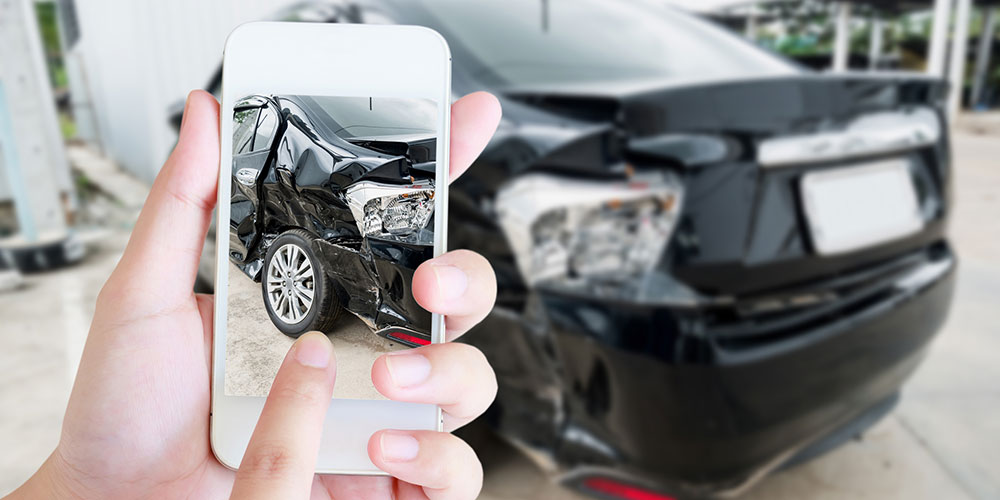
When you get your repair estimate, ask for a detailed breakdown. We need the body shop to document the direction of the damage. A professional estimate can note that the damage runs front-to-back or involves material transfer from the other vehicle. This technical documentation serves as an expert opinion on how the impact occurred.
Handling Uninsured or Phantom Drivers
In some cases, a sideswipe involves a driver who flees the scene, or a driver who forces you off the road without ever making contact (a phantom vehicle).
The Miss-and-Run Scenario
If a car drifts into your lane and you swerve to avoid them, hitting a guardrail, the other driver may keep going. In South Carolina, you may file a claim under your own Uninsured Motorist (UM) coverage for these scenarios.
Crucial Legal Nuance
There is a catch. To prevent fraud, South Carolina Code § 38-77-170 requires specific proof for phantom vehicle claims where there was no physical contact. You must have an independent witness to verify the existence of the other vehicle. If there was physical contact—even just a paint scrape—the requirement for a witness is generally waived.
FAQ for Sideswipe Collisions in South Carolina
What If the Other Driver Says I Drifted Into Their Lane?
If there are no witnesses, we would rely on physical evidence like tire yaw marks and paint transfer striations. Electronic data from the vehicle’s computer can also prove steering angles at the moment of impact, objectively showing which driver turned the wheel into the other lane.
What Happens If I Didn’t Call the Police at the Scene?
You should report the accident to the SCDMV if damage exceeds $1,000 or injury occurred. However, without a police report at the scene, the insurance investigation will rely heavily on independent witness statements and forensic vehicle damage analysis. This makes the claim more difficult, but not impossible.
Does South Carolina Require Me to Give a Recorded Statement to the Other Driver’s Insurance?
No. You are not legally obligated to provide a recorded statement to the at-fault driver’s insurer. Providing one without legal counsel could inadvertently hurt your claim, as adjusters are trained to ask leading questions.
What If I Was Sideswiped by a Rental Car?
You would file a claim against the driver’s personal insurance policy. If they do not have personal insurance, or if they purchased supplemental coverage, you may be able to pursue the rental company’s supplemental liability coverage. These cases can be complicated due to the layers of insurance involved.
Protect Your Rights After a Sideswipe Collision
The difference between a denied claim and a fair settlement in a sideswipe case comes down to the preservation of evidence in the days immediately following the crash.
Don’t let an insurance adjuster decide who was at fault based on a phone call. Call Hughey Law Firm today. We will review the details of your collision, help you secure the necessary evidence, and define the strategy required to pursue the compensation you deserve.

Nathan Hughey, an attorney and fourth-generation South Carolinian, founded Hughey Law Firm in 2007. Before that, he spent five years defending nursing homes and insurance companies. Leveraging his experience, he now advocates for those injured or wronged by such entities, securing over $300 million in verdicts and settlements.