What Are the Most Common Ways Truck Drivers Cause Accidents?
Truck AccidentsLarge commercial trucks are a constant presence on South Carolina roads, from I-26 heading into Charleston to the busy corridors around the Port. While most truck drivers are safe and professional, accidents do happen, and the results can be devastating. Many of these serious collisions are caused by a few common, and often preventable, driver actions.
These incidents often stem from violations of federal safety regulations, simple human error, or pressure from trucking companies, leading to serious consequences for others on the road.
Key Takeaways about the Most Common Ways Truck Drivers Cause Accidents
- Federal regulations, such as Hours of Service rules, are in place to prevent common causes of accidents like driver fatigue, but violations are frequent.
- Driver distraction, including cell phone use, is a significant factor in commercial truck crashes, as a truck can cover a large distance in seconds.
- Speeding, improper maintenance, and driving under the influence are other leading ways truck drivers contribute to serious collisions.
- A driver’s actions are not the only potential cause; the trucking company may also hold responsibility for issues like poor training or maintenance.
- Evidence from a truck’s electronic data recorder, or “black box,” can be crucial in determining the cause of an accident.
- Investigating a commercial truck accident often involves examining driver logs, maintenance records, and company hiring practices.
The Dangers of Driver Fatigue
One of the most widely recognized dangers in the trucking industry is driver fatigue. A tired driver can have slowed reaction times, poor judgment, and a greater chance of falling asleep at the wheel. To combat this, the Federal Motor Carrier Safety Administration (FMCSA) has established strict Hours of Service (HOS) regulations. These rules dictate how long a commercial driver can be on the road before they must take a mandatory rest break.
Despite these rules, pressure to meet tight deadlines can lead drivers or their companies to push the limits. Some may falsify their logbooks or continue driving when they feel exhausted. On long, monotonous stretches of highway like I-95 that run through South Carolina, the risk of fatigue-related incidents increases significantly. When a driver ignores HOS rules and causes an accident, they and their employer can be held accountable.
Distracted Driving: A Growing Problem in Commercial Trucking
 We often think of distracted driving in the context of passenger cars, but it is just as dangerous, if not more so, when the driver is behind the wheel of an 80,000-pound truck. A moment of inattention can have catastrophic results.
Distractions typically fall into three categories:
- Visual Distractions. These are anything that takes the driver’s eyes off the road, such as looking at a GPS, checking a text message, or adjusting the radio;
- Manual Distractions. These involve taking one or both hands off the steering wheel to do something else, like eating, drinking, or reaching for an object in the cab;
- Cognitive Distractions. This is when a driver’s mind is not focused on the task of driving, perhaps because they are deep in thought, talking on a hands-free device, or feeling stressed.
Even a few seconds of distraction can be enough for a truck to travel the length of a football field. On busy roads like Highway 17 in Mt. Pleasant, that small window of inattention can easily lead to a serious rear-end collision or lane-change collision.
The Risk of Speeding and Aggressive Driving
The sheer size and weight of a commercial truck mean it requires a much greater distance to slow down and stop than a passenger vehicle. According to the Insurance Institute for Highway Safety (IIHS), a loaded tractor-trailer can take much longer to stop than a car, and this distance is even greater on wet or slick roads.
When a truck driver exceeds the speed limit or drives too fast for the current conditions, they dramatically increase the risk of a crash. This behavior is particularly hazardous in construction zones, in heavy traffic around Charleston, or during the Lowcountry’s frequent rainstorms.
Other forms of aggressive driving that contribute to accidents include:
- Following other vehicles too closely (tailgating);
- Making improper or unsafe lane changes without signaling;
- Failing to yield the right-of-way.
These actions demonstrate a disregard for the safety of others and can be a key factor in determining fault after a collision.
Driving Under the Influence of Alcohol or Drugs
Federal law holds commercial driver’s license (CDL) holders to a much higher standard than other drivers when it comes to alcohol and drug use. The legal blood alcohol concentration (BAC) limit for a CDL holder is .04%—half the .08% limit for other drivers. The FMCSA’s drug and alcohol regulations are strict because any substance that impairs judgment, coordination, or reaction time can turn a large truck into an uncontrollable weapon.
Unfortunately, some drivers still choose to get behind the wheel after consuming alcohol or using illegal or prescription drugs that affect their ability to drive safely. Trucking companies are required to have drug and alcohol testing programs in place, but violations still occur, putting everyone on the road in danger.
Inadequate Training and Driver Inexperience
Operating a large commercial truck requires a specific set of skills that go far beyond what is needed to drive a car. A driver must know how to handle their vehicle in various conditions, manage wide turns, brake safely, and properly secure their cargo. When a trucking company fails to provide adequate training or hires an inexperienced driver, they create a dangerous situation.
Some of the common ways truck drivers cause accidents related to poor training include:
- Improper Turns. Misjudging the space needed for a turn, especially right turns, can cause the truck’s trailer to swing into another lane or onto a sidewalk;
- Unsecured Cargo. If cargo is not loaded and secured correctly, it can shift during transit, causing the driver to lose control or spill onto the roadway, creating a hazard for other drivers;
- Lack of Defensive Driving Skills. An inexperienced driver may not know how to anticipate the actions of other motorists or react appropriately to sudden changes in traffic, such as those often seen crossing the Arthur Ravenel Jr. Bridge.
In these situations, the responsibility may lie not only with the driver but also with the trucking company for its hiring and training practices.
Poor Vehicle Maintenance and Failed Inspections
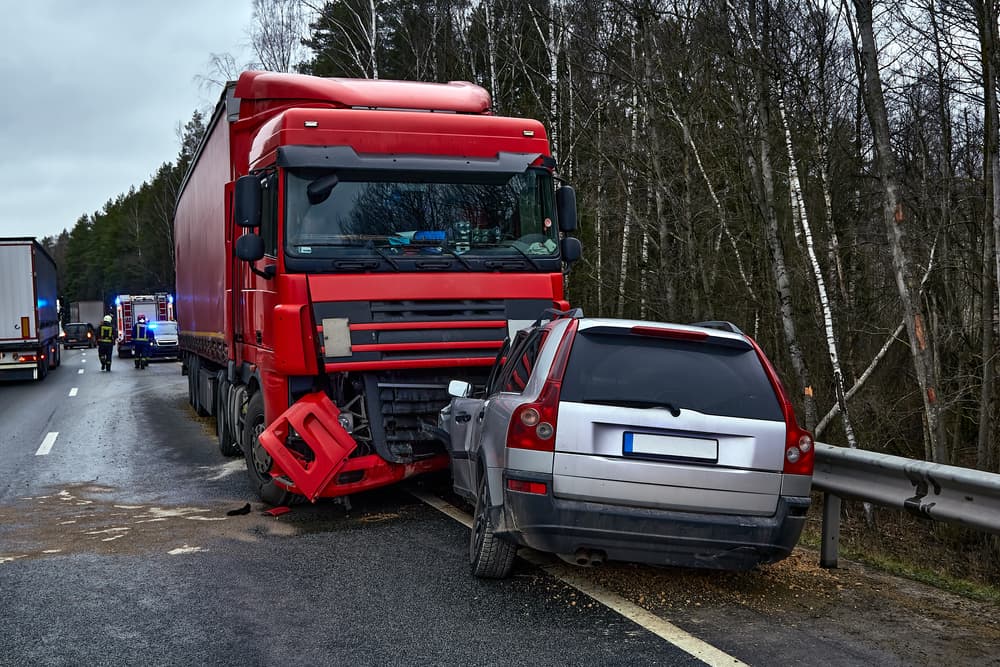 While the driver is behind the wheel, the mechanical condition of the truck is critical to its safe operation. Both drivers and trucking companies have a responsibility to ensure their vehicles are in good working order. Drivers are typically required to perform pre-trip inspections to check for any obvious issues. Trucking companies must follow regular maintenance schedules.
When these duties are neglected, mechanical failures can lead to terrible accidents. Some of the most common maintenance-related causes of truck crashes are:
- Brake Failure. A truck’s air brake system is complex, and if it is not properly maintained, it can fail, leaving the driver unable to stop;
- Tire Blowouts. Worn or underinflated tires are prone to blowouts, which can cause a driver to lose control of the vehicle suddenly;
- Lighting and Signal Issues. Burned-out headlights, taillights, or turn signals make a truck less visible, especially at night or in bad weather, and prevent the driver from communicating their intentions to others.
According to federal regulations, commercial motor vehicles must be systematically inspected, repaired, and maintained. When an accident is caused by a mechanical failure that could have been prevented, the trucking company can be held accountable for its failure to maintain its fleet.
Understanding Your Options After a Truck Accident
If you have been injured in a collision with a large truck, the situation can feel complex. It is often not just about one driver’s mistake; it may involve company policies, maintenance records, and layers of insurance. Sorting through these details to understand who is responsible requires a careful and thorough approach.
Gathering evidence is a key part of this process. This can include the police report, witness statements, photos of the scene, and your medical records. In a truck accident case, it also involves securing important evidence from the trucking company, such as the driver’s logs, the truck’s maintenance history, and data from the electronic data recorder (EDR), or “black box.” This device records information about the truck’s speed, braking, and other operational data just before a crash, which can be critical in showing how the driver caused the accident.
Finding an affordable truck accident lawyer who can help you with this process can make a significant difference. Many personal injury attorneys work on a contingency fee basis, often described as “no win, no fee.” This arrangement means you do not pay any attorney’s fees unless they successfully recover money for you. This makes skilled legal representation accessible to everyone, regardless of their financial situation. If you are searching for a “truck accident lawyer near me” in South Carolina, this is an important factor to consider.
FAQs about the Most Common Ways Truck Drivers Cause Accidents
Here are some answers to frequently asked questions about the causes of commercial truck accidents.
What is the difference between the truck driver’s fault and the trucking company’s fault?
The driver can be at fault for direct actions like speeding, distracted driving, or driving while fatigued. The trucking company can be held responsible for systemic issues, such as hiring unqualified drivers, encouraging drivers to violate Hours of Service rules, or failing to properly maintain their vehicles. In many cases, both parties may share responsibility.
How does a truck’s “black box” or EDR help in an accident case?
An Event Data Recorder (EDR) captures critical data in the moments leading up to and during a collision. It can show the truck’s speed, whether the brakes were applied, the engine’s RPM, and other key information. This data provides an unbiased account of the truck’s operation and can be crucial evidence to prove a driver was speeding or failed to brake in time.
Can bad weather be the only cause of a truck accident?
While bad weather like heavy rain or fog can contribute to an accident, it is rarely the sole cause. Commercial drivers are trained professionals who are expected to adjust their driving for the conditions. This means slowing down, increasing following distance, or even pulling over if conditions are too dangerous. If a driver fails to do so and causes a crash, they may still be considered at fault.
What should I do if the trucking company’s insurance adjuster calls me?
It is wise to be cautious when speaking with an insurance adjuster from the trucking company. Their job is to protect their company’s financial interests, which often means trying to settle a claim for the lowest amount possible. They may ask for a recorded statement or try to get you to say something that could be used to diminish your claim later. It is often best to speak with a lawyer before providing any detailed statements.
Are there specific laws in South Carolina for commercial trucks?
Yes, in addition to federal FMCSA regulations, South Carolina has its own state laws governing commercial vehicles. For instance, Title 56 of the South Carolina Code of Laws outlines traffic laws, vehicle size and weight restrictions, and other rules of the road that apply to all drivers, including those of commercial trucks.
Contact an Experienced South Carolina Truck Accident Attorney
A serious truck accident can leave you and your family dealing with injuries, medical bills, and uncertainty. You should not have to handle a personal injury claim on your own. At Hughey Law Firm, our attorneys have a history of standing up to large insurance companies and advocating for the rights of injured people. With over $300 million recovered in verdicts and settlements, we are committed to helping our clients seek the compensation they deserve.
We handle these cases on a “no win, no fee” basis, which means our legal help is affordable and you owe us no attorney’s fees unless we win your case. If you’ve been injured in a truck accident in Charleston, Mt. Pleasant, or surrounding South Carolina areas, contact Hughey Law Firm today for a free consultation.
Contact us at (843) 881-8644 or through our online form to discuss your case with a dedicated personal injury lawyer.

Nathan Hughey, an attorney and fourth-generation South Carolinian, founded Hughey Law Firm in 2007. Before that, he spent five years defending nursing homes and insurance companies. Leveraging his experience, he now advocates for those injured or wronged by such entities, securing over $300 million in verdicts and settlements.